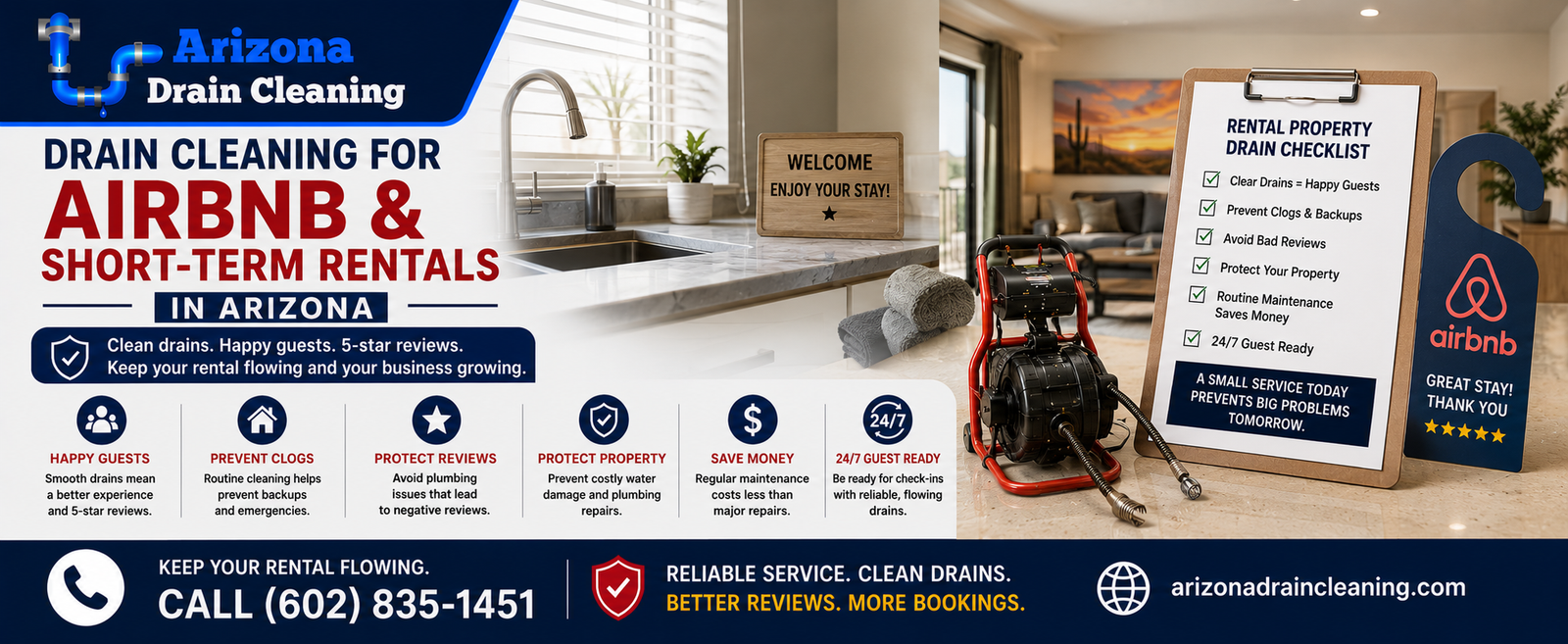
Drain cleaning for Airbnb properties in Arizona is not the same conversation as drain cleaning for a home where the same family has lived for ten years. When a property in Scottsdale, Phoenix, or Sedona hosts a new group of guests every few days, the drain system takes a volume of use that most residential pipes were never designed to absorb at that pace. Hair from dozens of different guests accumulates in shower drains weekly. Cooking grease from guests who do not know your kitchen habits coats the drain walls. Foreign objects that no owner would ever flush end up in the toilet by guests who are not treating the property like their own home because it is not.
Arizona’s short-term rental market is one of the largest and fastest-growing in the country. Phoenix currently has nearly 6,000 active STR listings, and Scottsdale consistently ranks among the most profitable Airbnb and VRBO markets in the Southwest, with average daily rates topping $300 and annual earnings pushing toward $40,000 per property for well-positioned listings. Sedona adds another layer to Arizona’s STR landscape with its own concentrated market of high-demand vacation properties. With that level of revenue on the line, a backed-up drain during peak season is not just an inconvenience. It is a one-star review, a guest refund request, and a lost booking, all in the same 24 hours, which is why many property owners rely on ArizonaDrainCleaning to stay ahead of emergency issues.
This guide is written specifically for Arizona STR owners who want to protect their revenue by managing drain maintenance the right way, rather than reacting to drain emergencies one crisis at a time.
Why Arizona Short-Term Rentals Face Drain Problems Faster Than Typical Homes
The math of high-turnover drain wear is straightforward but worth stating clearly. A family home with four people generating typical residential drain use accumulates hair, grease, and soap scum at a predictable rate that most residential drain systems can handle for months before cleaning is necessary. An Airbnb property hosting groups of four to eight guests every three to four days is processing the equivalent of several months of that residential use every single month.
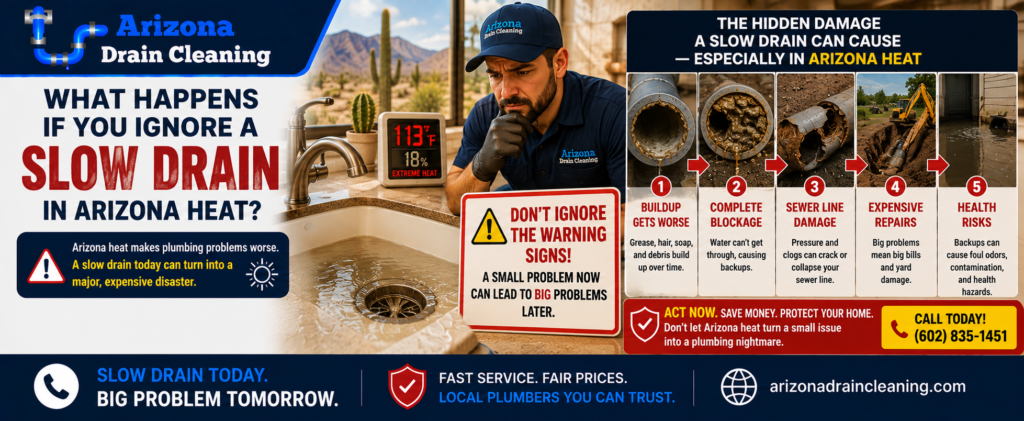
Add the Arizona-specific plumbing context on top of that, and the wear rate accelerates further. Arizona’s notoriously hard water, which ranks among the highest dissolved mineral concentrations in the United States, deposits calcium and magnesium scale on pipe interiors faster than almost anywhere else in the country. That scale buildup narrows pipe diameter over time and creates a rough interior surface that catches debris, hair, and grease with much greater efficiency than a smooth-walled pipe. A PVC drain in a Phoenix Airbnb property that has been running hard water through it for five years looks very different inside than a comparable drain in a soft-water market, and it backs up much more readily when the volume of use is high.
Short-term rental guests also introduce a different pattern of drain use than long-term residents. Guests on vacation cook more elaborate meals in fully-equipped kitchens and pour grease they might handle differently at home directly down the drain. Guests staying for bachelor and bachelorette parties, which are a significant segment of Scottsdale’s STR demand given the city’s event-tourism profile, generate notoriously hard drain use through large group showers, elevated food and beverage activity, and sometimes deliberate or accidental flushing of items that belong in a trash can rather than a toilet. Guests unfamiliar with the property and not invested in its long-term condition behave differently with plumbing fixtures than owners do.
None of this is unique to Arizona, but the scale of Arizona’s STR market, combined with Arizona’s hard water and the older pipe systems in many of Phoenix’s and Scottsdale’s most popular rental neighborhoods, makes drain maintenance a more pressing operational concern here than in most markets.
The Most Common Drain Problems in Arizona Airbnb Properties
Understanding the specific failure modes that affect STR drain systems helps prioritize where maintenance attention goes and when professional service is needed versus when a cleaning crew check is sufficient.
Hair Accumulation in Shower and Tub Drains
Hair is the most universal drain problem in short-term rentals, and it accumulates faster than most property owners expect. A typical long-term residential household produces a consistent, manageable volume of hair from a known number of people. An STR hosting a bachelorette group of eight women for a three-night stay on a Scottsdale weekend can deposit more hair into the shower drain in 72 hours than a typical household produces in a month. Hair does not dissolve or break down. It catches on drain hardware, accumulates in the trap, and creates a mesh that catches everything else coming down the drain after it.
Hair buildup that is not cleared consistently becomes a compounding problem. As the hair mat in the drain trap grows, it slows drainage, retains moisture, creates odor, and eventually causes the kind of standing water in the shower that guests photograph and post in reviews. In Arizona’s hard water environment, calcium deposits form around hair accumulations inside drain pipes, creating a partially mineralized mass that standard snaking removes less effectively than a freshly accumulated hair blockage. The longer hair is left in a drain, the harder it is to clear.
Grease and Soap Scum Buildup in Kitchen Drains
Vacation rental guests cook at higher-than-average rates compared to hotel guests, and they cook with unfamiliar equipment in an unfamiliar kitchen. Grease poured down a Phoenix Airbnb’s kitchen drain in January, when the water temperature is cool, congeals inside the drain pipe and starts accumulating debris from the first day. Short-term rental kitchens in Arizona’s popular resort markets like Scottsdale and Paradise Valley host guests who are entertaining, cooking large group meals, and sometimes running dishwashers at a volume and frequency well above standard residential use. The grease load in these drains can be substantial within a single busy booking month.
Arizona’s hard water compounds the grease problem specifically. When high-mineral water mixes with soap residue and grease inside a drain line, it forms a particularly tenacious scale and grease compound that is harder to clear than either substance alone. This is the same dynamic that affects any drain in Arizona’s hard water zones, but it moves faster in an STR property where the volume of use is high.
Foreign Objects and Flushing Incidents
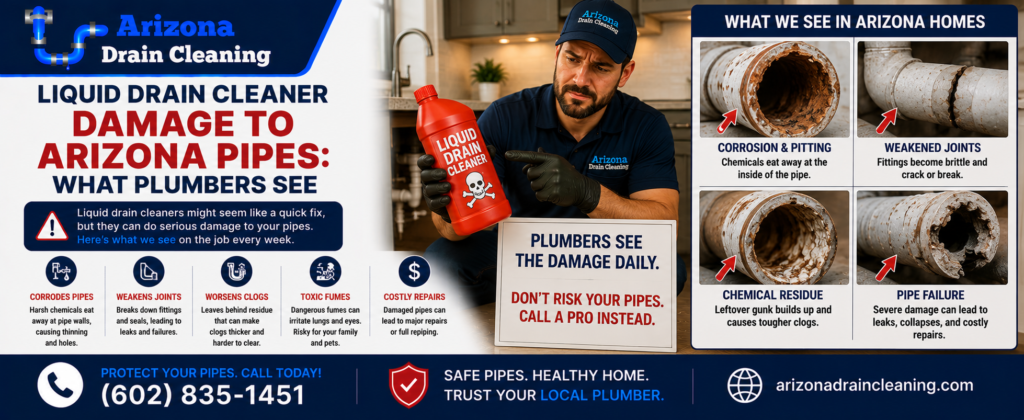
This is the category that causes the most acute, emergency-level problems in STR drain systems. Guests who are not treating the property as their own home are statistically more likely to flush wipes, feminine hygiene products, paper towels, and other non-flushable items that cause immediate mainline blockages. In Scottsdale and Phoenix’s party-rental market, this problem is amplified during high-occupancy group stays.
The damage profile of a foreign object blockage in an Arizona STR is particularly serious because of timing. Most STR blockages caused by guest behavior are not discovered until the next cleaning crew arrives, or worse, until the next guests have already checked in and are calling to report a backed-up toilet. At that point, the situation is a true emergency that requires same-day professional service, and same-day emergency service in Phoenix and the surrounding Valley carries the after-hours and emergency premium pricing that typically runs 1.5 to 2 times standard service rates.
Managing the response window matters. A blockage discovered during a cleaning turnover between guests has a 2 to 4 hour window to be addressed before the next check-in. A blockage discovered after the next guests are already on-site has an immediate urgency that puts the property owner in a significantly worse negotiating position with any service provider they call.
Short-Term Rental Drain Maintenance in Arizona: A Recommended Schedule
Arizona STR property owners who approach drain maintenance proactively rather than reactively spend significantly less money on drain-related repairs and emergency calls than those who only address problems when guests report them. Here is a practical maintenance schedule built around Arizona’s specific conditions and the high-turnover demands of the STR market.
Between Every Guest Stay: Drain Check During Turnover
Every cleaning turnover should include a drain check protocol that takes less than five minutes but catches the problems that compound into expensive emergencies if left unaddressed. This is not a professional plumbing inspection. It is a simple operational check that a trained cleaning crew can perform.
Run water in every sink, the shower, and the tub for 30 seconds. If the water drains immediately and completely, the drain is clear. If the water is slow to drain or pools before clearing, note it immediately and address before the next guest check-in. Remove the shower drain cover and clear any visible hair accumulation during every cleaning. Check that the kitchen drain runs freely after any dishwashing. Confirm that the toilet flushes completely and that the tank refills normally.
This five-minute protocol, performed consistently at every turnover, catches slow drains before they become blocked drains and identifies foreign object risks before they become complete blockages.
Monthly: Enzymatic Drain Treatment
Arizona’s hard water environment makes preventive enzyme treatment more valuable in STR properties than in soft-water markets. A monthly enzymatic drain treatment, added to kitchen and bathroom drains on a scheduled basis rather than as a reaction to slow drainage, helps break down organic buildup before it accumulates to a level that causes flow restriction. Enzyme treatments work best when drains are running slowly through them rather than being poured into a standing-water blockage, which is another reason the turnover drain check matters. A clear drain treated monthly with an enzyme product stays cleaner longer under high-use conditions than an untreated drain.
Quarterly: Professional Drain Cleaning
A quarterly professional drain cleaning is the right service interval for most active Arizona STR properties. This applies specifically to shower drains, kitchen drains, and the main drain line in properties with high booking frequency, defined as 15 or more guest-nights per month.
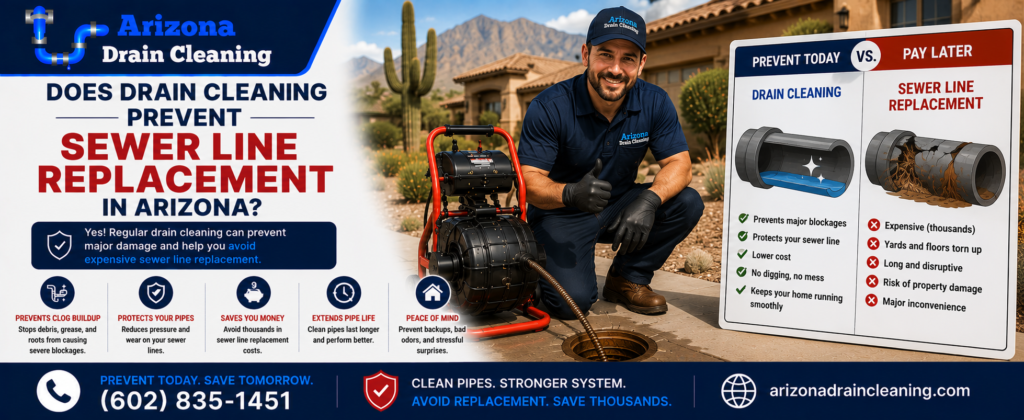
Quarterly professional cleaning does several things that monthly enzyme treatments and turnover checks cannot. A professional hydro jetting pass at 3,000 to 4,000 PSI strips mineral scale from drain walls, clears any grease accumulation that enzyme treatment has not fully dissolved, and removes hair accumulations in the trap and drain arm rather than just the visible surface. In an Arizona hard water environment, quarterly hydro jetting in an active STR property prevents the progressive narrowing of drain interiors that eventually produces the kind of slow-drain complaint that costs a rating point in a review.
For kitchen drains in STR properties that see heavy cooking use, monthly professional cleaning rather than quarterly may be warranted if the booking calendar is consistently full.
Annually: Main Sewer Lateral Camera Inspection
Any Arizona STR property built before 1985 should receive a professional sewer camera inspection annually. Properties in Phoenix neighborhoods like Arcadia, central Scottsdale, Tempe, and midtown Tucson that have older cast iron or clay tile laterals face the combined stress of Arizona’s expansive clay and caliche soil conditions and an above-average volume of use from STR guest traffic. A camera inspection identifies bellied sections, root intrusion, and joint failures before they produce the kind of main line backup that takes a property offline during peak season.
For newer STR properties with PVC laterals, a camera inspection every two to three years is a reasonable interval in the absence of recurring drain symptoms.
Between-Guest Drain Documentation: Protecting Your Revenue and Your Claims
This is the aspect of STR drain maintenance that most property owners overlook entirely until they need it, at which point it is too late. Documentation of drain condition between guest stays creates the evidentiary basis for platform damage claims and for distinguishing pre-existing conditions from guest-caused damage.
The practical implementation is simple. Your cleaning crew should photograph all drain hardware at the beginning of every turnover, specifically any slow drains or visible blockage material identified during the turnover check. Date-stamped photographs showing a clear, functioning shower drain before a guest stay and a drain packed with a foreign object blockage after that guest stay is the documentation that supports a platform damage claim successfully. Without that before-and-after documentation, damage claims are frequently disputed on platforms like Airbnb and VRBO because there is no objective evidence linking the damage to the specific guest stay.
Log every drain service call by date, property, drain location, and finding. A written maintenance log showing a professionally cleaned main drain in clear condition 30 days before a guest-caused backup demonstrates that the blockage was not a pre-existing condition. This documentation matters for platform claims, for insurance purposes, and for understanding the pattern of which guests and which booking types generate drain problems so that you can make operational adjustments.
Emergency Drain Response for Arizona STR Properties: What to Do and When
Despite good preventive maintenance, emergency drain situations happen in STR properties. Knowing how to respond correctly protects both the guest experience and the property owner’s revenue.
The most important operational decision in an STR drain emergency is the call-or-wait assessment. Here is the honest framework.
Call immediately for professional service when: a toilet is completely backed up with guests on-site, a main line backup is causing water to surface in multiple fixtures simultaneously, a drain backup is producing odor inside the property with guests in residence; or a kitchen drain is fully blocked with guests scheduled to check in within the next four hours.
These situations qualify as true plumbing emergencies where the cost of waiting, in the form of a guest refund, a platform complaint, and a negative review, is almost certainly higher than the after-hours premium a professional service call will carry. Emergency drain cleaning in the Phoenix metro from a professional service typically carries a surcharge of 1.5 to 2 times the standard rate for calls outside normal business hours, on weekends, and on holidays. That premium is a real cost, but it is smaller than the revenue loss from a guest checkout complaint or a forced partial refund.
It can potentially wait until morning when: a single drain is running slowly but still draining, the slow drain is in a bathroom that is not the only bathroom in the property, guests have checked out and the property is unoccupied, or the next guest check-in is more than 12 hours away.
In the wait-until-morning category, scheduling service first thing the next morning rather than deferring it indefinitely is still the right move. A drain that is slow rather than blocked can become a blocked drain after one more guest shower, particularly in Arizona hard water conditions where scale-narrowed pipes have less reserve capacity.
For drain cleaning in Phoenix and throughout the Valley, Arizona Drain Cleaning provides service to STR property owners with the responsiveness that high-turnover properties require. Our team understands the operational reality of Airbnb and vacation rental property management, including the time-sensitive nature of between-guest service windows.
Why Arizona’s Hard Water and Soil Conditions Make STR Drain Maintenance Non-Negotiable
Short-term rental drain maintenance in Arizona is not a best practice recommendation. It is a functional operating requirement that the local environment makes unavoidable. Arizona’s hard water accelerates scale buildup in every drain in every property in the Valley at a rate that property owners from other states consistently underestimate when they first invest here. A Scottsdale Airbnb that ran flawlessly in its first year of operation will typically show its first meaningful drain restrictions in year two or three as mineral accumulation narrows pipe interiors to the point where high-use STR volume starts causing symptoms.
The soil conditions under most Phoenix and Scottsdale rental properties add a sewer lateral dimension to the maintenance picture. Expansive clay soil and caliche hardpan stress underground pipe systems in ways our related post on Arizona soil types and underground pipe damage covers in detail. For STR operators, the relevant takeaway is that older properties in high-demand rental neighborhoods carry a genuine risk of sewer lateral problems that are completely invisible until a backup forces the issue. A pre-season camera inspection is far cheaper than an emergency excavation during a peak booking period.
Frequently Asked Questions: Drain Cleaning for Airbnb Properties in Arizona
How often should I have the drains professionally cleaned in my Arizona Airbnb property?
For an active STR property with 15 or more guest-nights booked per month, quarterly professional drain cleaning is the right service interval for shower, tub, and kitchen drains. Main sewer lateral inspection should be done annually for properties built before 1985, and every two to three years for newer properties with PVC pipe systems. Properties in Arizona’s popular high-demand markets like Scottsdale, Paradise Valley, and central Phoenix that host large groups frequently may benefit from more frequent kitchen drain service, potentially monthly for properties with consistently high booking calendars.
What is the most common cause of drain backups in Arizona vacation rentals?
In Arizona STR properties, hair accumulation in shower and tub drains is the most frequent cause of slow drains and minor backups, and it is the most preventable through consistent turnover protocol. Grease accumulation in kitchen drains is the second most common cause, particularly in properties that market themselves as having fully-equipped kitchens that attract groups who cook. Foreign object flushing, most commonly wipes and paper towels, causes the most acute emergency-level blockages that require immediate professional service and are the most disruptive to guest stays and property operations.
Can I claim guest-caused drain damage through Airbnb’s AirCover program?
Airbnb’s AirCover program does cover guest-caused damage to a property, and documented drain damage caused by guests can be submitted as a claim. The critical factor is documentation. Before-and-after photographs from the turnover cleaning that show drain condition before and after the specific guest stay, combined with a professional plumber’s written assessment identifying the cause of the blockage, form the basis of a supportable claim. Without that documentation, claims are difficult to substantiate because there is no objective evidence tying the damage to the specific guest. A written drain maintenance log showing a clean drain condition prior to the stay strengthens the claim significantly.
Should I disclose STR guest use when scheduling drain service?
Yes, and it matters practically as well as for documentation purposes. Letting the drain service technician know the property is a high-turnover short-term rental changes the service approach in meaningful ways. A technician who knows the property has seen 40 or 50 guest-nights since the last cleaning will approach the job differently than one treating it as a standard residential property. They will be more thorough about the trap and drain arm in the shower, more attentive to the main line condition, and more likely to recommend the right service frequency for the property’s actual use pattern.
How do I handle a drain emergency between guest stays when the property is in another city?
Remote STR management is a specific operational challenge that Arizona property owners in Phoenix, Scottsdale, and the surrounding Valley deal with regularly. The answer is establishing a relationship with a reliable drain cleaning company before an emergency occurs, not during one. Having a saved contact for a trusted local drain service, a key lockbox that allows technician access without requiring the owner to be present, and a clear protocol for your cleaning crew to identify and immediately report drain issues during every turnover gives you the operational infrastructure to address emergencies quickly regardless of where you are. Last-minute emergency searches at 10pm from two states away produce the worst service outcomes and the highest prices.
How does Arizona’s hard water affect drain maintenance in STR properties specifically?
Arizona’s very hard water, which carries some of the highest dissolved calcium and magnesium concentrations in the country, accelerates mineral scale buildup inside drain pipes significantly faster than soft-water markets. In an STR property processing above-average water volume through high guest turnover, this scale accumulation happens faster than in a comparable residential property with the same pipe system. The practical result is that drain cleaning intervals that would be appropriate in a soft-water market are insufficient in Arizona. Quarterly professional cleaning that might be overkill for a Denver rental is a bare-minimum interval for an active Scottsdale or Phoenix Airbnb operating in hard water conditions.
Your Arizona STR Revenue Depends on Plumbing That Works
A backed-up drain is never a good guest experience. In the Arizona short-term rental market, where Scottsdale properties command premium nightly rates and where guest reviews directly drive future bookings and platform algorithm placement, a drain issue that disrupts a guest stay is not just an inconvenience. It is a quantifiable revenue risk. A single bad review mentioning plumbing problems can suppress your listing’s visibility on Airbnb or VRBO for weeks. A forced partial refund for an uninhabitable night costs more than a year of quarterly drain cleanings.
The STR owners who manage their Arizona properties most profitably treat drain maintenance the same way they treat HVAC service and pool care: as a scheduled, non-negotiable operating cost that prevents the much larger unscheduled costs that come from deferred maintenance.
Arizona Drain Cleaning works with short-term rental property owners throughout the Phoenix metro, Scottsdale, Mesa, Chandler, and the surrounding Valley communities. We understand the operational timeline of STR property management, and we provide the reliable, professional drain service that your guests and your revenue depend on. Call Arizona Drain Cleaning at (602) 835-1451 to schedule your next service.