Drain maintenance contracts for property managers in Arizona are one of the smartest operational decisions you can make for your portfolio. Whether you manage a single commercial building in Scottsdale, a multi-unit apartment complex in Mesa, a retail strip in Chandler, or a hotel property in the Phoenix metro area, your drainage infrastructure is under pressure every single day. Working with a professional Arizona Drain Cleaning company helps property managers stay ahead of costly plumbing emergencies before they disrupt tenants or operations.
Arizona’s unique environment makes that pressure significantly harder on pipes than most property managers realize until something goes wrong. Hard water mineral buildup, grease accumulation, monsoon debris, and aging infrastructure all place constant stress on commercial drain systems throughout the state.
This guide breaks down exactly what drain maintenance contracts are, why they matter more in Arizona than almost anywhere else, what they should include, how they protect you legally and financially, and what to look for when choosing a reliable Arizona Drain Cleaning service partner for your properties.
Why Property Managers in Arizona Cannot Afford Reactive Drain Management
There is a fundamental difference between managing maintenance reactively and managing it proactively. Reactive management means you wait for a tenant to call about a backed-up drain, then scramble to find someone who can come out quickly, often at premium emergency pricing. Proactive management means your drainage systems are on a documented schedule and problems are caught and resolved before they disrupt operations or reach tenants at all.
For property managers specifically, the reactive model creates a chain reaction of problems that go well beyond a plumbing bill. A backed-up sewer line in a residential apartment complex means tenants without functional bathrooms. A blocked floor drain in a commercial kitchen means a potential health code violation and forced closure. A grease interceptor that overflows in a food court property means environmental liability and municipal fines. Every one of these scenarios is far more expensive than the preventive maintenance that would have stopped it.
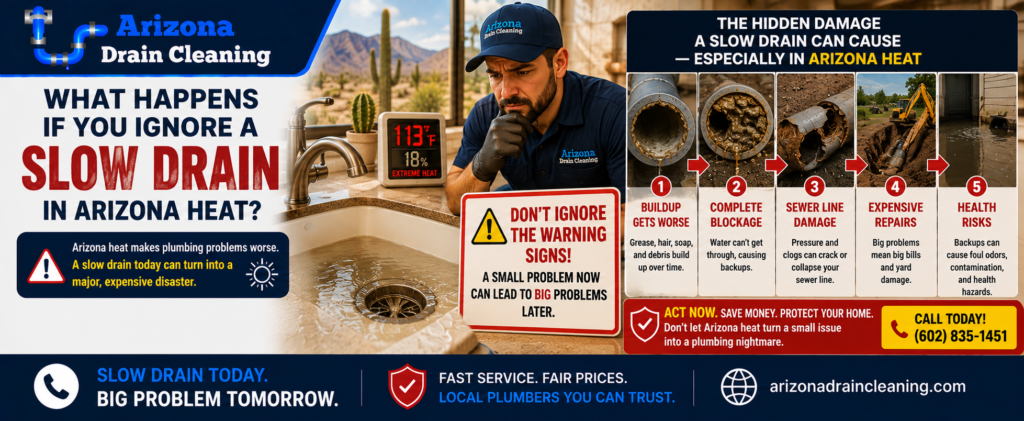
Arizona compounds the challenge considerably. Phoenix and surrounding communities in Maricopa County are well known for extremely hard water, with mineral content levels measured between 173 and 287 parts per million in many service areas. That elevated calcium and magnesium content coats the interior walls of drain pipes, creates buildup that traps grease and debris, and narrows pipe diameter over time in a way that feels invisible until it is suddenly catastrophic. Add the extreme heat, the monsoon season sediment loads, and the aggressive root systems of desert trees like mesquites and oleanders seeking moisture in any available pipe crack, and Arizona’s drainage environment is genuinely demanding by national standards.
Property managers who treat drain maintenance as a line item to defer are routinely the ones dealing with the most expensive emergencies.
What Is a Drain Maintenance Contract?
A drain maintenance contract is a formal service agreement between a property manager or property owner and a professional drain cleaning company. The contract defines a scheduled program of preventive drain services, inspection protocols, response commitments, and pricing terms that govern the entire relationship for a set period, typically annually, with renewal options.
Unlike calling a plumber on a per-incident basis, a drain maintenance contract establishes a predictable, proactive relationship. You know what services are being performed, when they are being performed, who is responsible for doing them, and what you will pay. The service provider knows your property, your drainage system configuration, your tenant mix, and the history of any recurring issues.
For property managers overseeing multiple properties simultaneously, this structure is enormously valuable. You are not juggling separate vendor relationships for each emergency at each location. You have a documented, consistent program running across your portfolio.
What Should a Drain Maintenance Contract Include
Not all drain maintenance contracts are identical, and the detail and scope of what is covered matter significantly. Here is what a well-structured contract for Arizona commercial properties and multi-unit residential properties should typically cover.
Scheduled Drain Inspections
Regular inspections using video camera technology are the foundation of any quality drain maintenance program. A camera inspection sends a high-resolution lens through your drain and sewer lines to visually assess the condition of pipe walls, identify buildup, locate any cracks or structural damage, and document the overall system health. Inspections should be scheduled at intervals appropriate to your property type, tenant use, and the history of the system. For high-volume commercial properties, quarterly inspections are often warranted. For lower-use office or residential properties, semi-annual or annual inspections may be sufficient.
The documentation produced by camera inspections is not just operationally useful. It creates a record that protects property managers in disputes with tenants, insurance claims, and regulatory inquiries.
Hydro Jetting and Drain Line Cleaning
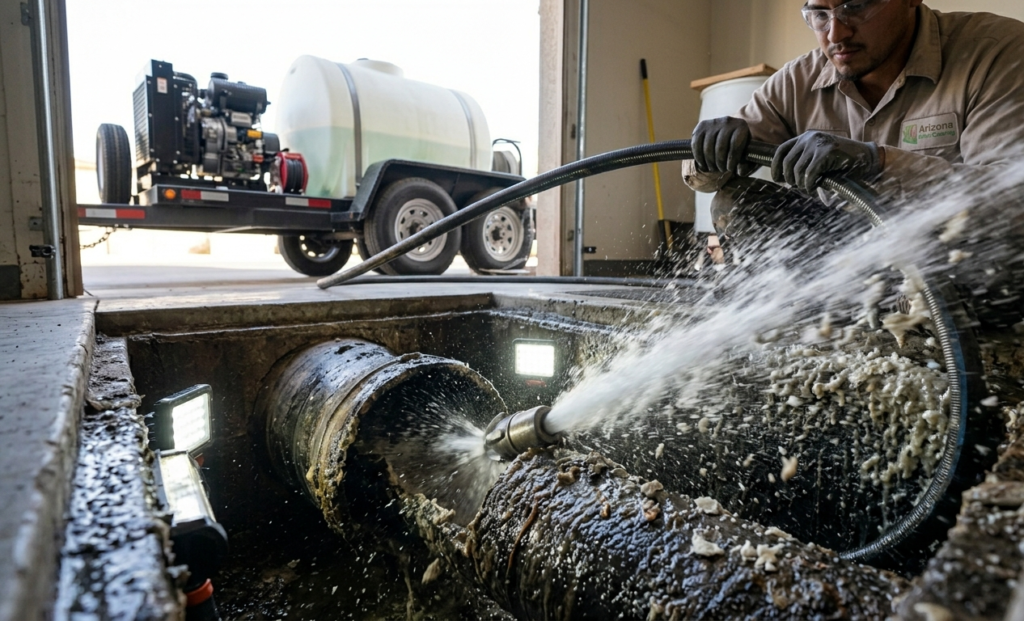
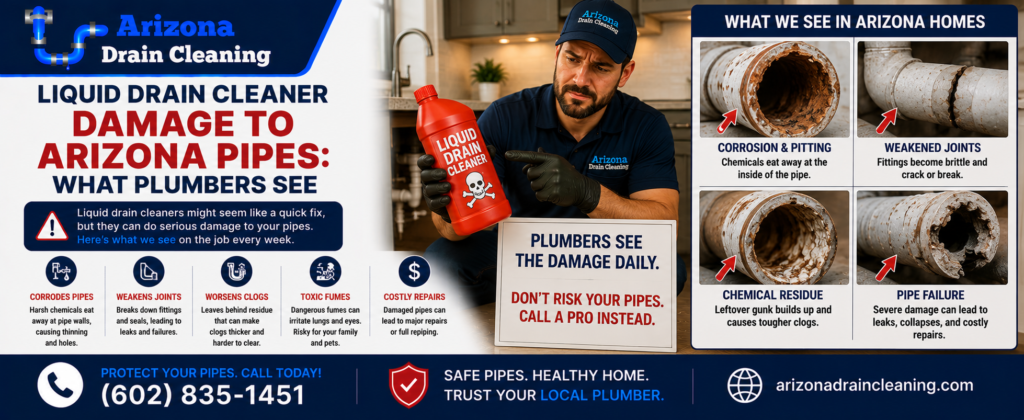
A contract should specify scheduled hydro jetting service at defined intervals. Hydro jetting uses high-pressure water to scour the interior walls of drain pipes, removing mineral scale, grease, biofilm, sediment, and organic waste buildup. For Arizona properties dealing with hard water mineral deposits, this is not a luxury service but a baseline maintenance requirement for keeping pipes flowing at full capacity.
The contract should specify the pressure ranges used, the pipe sections covered, and the method for handling any access challenges specific to your property configuration.
Grease Trap and Interceptor Service
For any property with food service tenants, whether a single restaurant, a food court, or a commercial kitchen operator, grease trap pumping and cleaning must be part of the maintenance contract. Arizona municipalities and health regulators require grease interceptors to be maintained on schedules sufficient to prevent overflow and contamination. A properly structured contract covers pumping frequency based on the volume of the interceptor and the activity level of the kitchen, typically ranging from monthly to quarterly service.
Floor Drain Maintenance
Commercial properties, including retail centers, parking structures, warehouses, industrial facilities, and hotels, rely on floor drains that are particularly susceptible to sediment, debris, and biological buildup. These drains are often overlooked in reactive maintenance models, but are specifically addressed in a comprehensive drain maintenance contract.
Emergency Response Terms
One of the most valuable elements of a drain maintenance contract for property managers is the priority emergency response clause. Contract clients should receive priority scheduling over non-contract service calls, with defined response time commitments for urgent situations. For a property manager dealing with a sewer backup on a Sunday evening, knowing you have a contractual response time guarantee from your service provider is meaningful.
The contract should specify what constitutes an emergency, what the guaranteed response window is, and whether emergency calls within contract scope are covered under the contract rate or billed separately.
Documentation and Reporting
Every service visit under a drain maintenance contract should produce documented records, including the date of service, the scope of work performed, the findings of any inspection, photos or video from camera work, and any recommendations for follow-up. These records are essential for property managers who need to demonstrate maintenance compliance, respond to tenant complaints, support insurance claims, or manage warranty issues on plumbing components.
Pricing Structure and Escalation Terms
A well-written contract establishes clear pricing for scheduled services, a defined rate or discount structure for additional services identified during inspections, and any escalation terms for renewal periods. Predictable pricing is one of the core financial benefits of a drain maintenance contract for property managers who are managing operating budgets across multiple properties.
The Specific Benefits of Drain Maintenance Contracts for Arizona Property Managers
Budget Predictability
Emergency plumbing and drain service is consistently more expensive than scheduled preventive service. Emergency calls carry premium labor rates, and the damage caused by a drain failure before it is addressed, whether that is water intrusion, tenant disruption, or health code exposure, adds costs that dwarf the underlying plumbing repair. A drain maintenance contract converts what would otherwise be unpredictable emergency costs into a defined, budgeted line item. For property managers working with annual operating budgets and ownership groups who want cost predictability, that conversion has genuine financial value.
Tenant Satisfaction and Retention
In both residential and commercial property management, tenant satisfaction directly affects renewal rates, vacancy periods, and the reputation of your portfolio in the market. Tenants in multi-unit residential properties who experience repeated drain backups, foul odors from poorly maintained sewer lines, or slow drains across multiple units eventually look for alternative housing. Commercial tenants whose operations are disrupted by plumbing failures that were foreseeable and preventable hold their property manager accountable and factor that reliability into lease renewal decisions.
A documented drain maintenance program is something a property manager can point to as evidence of responsible asset stewardship. It demonstrates to tenants and ownership groups alike that the property is being managed with professional discipline.
Regulatory Compliance Support
Property managers in Arizona operate under obligations established by the Arizona Residential Landlord and Tenant Act, local municipal codes, and health department regulations applicable to specific property types. Functioning plumbing is not optional under Arizona state law. Maintaining detailed records of a scheduled drain maintenance program demonstrates that you are meeting your obligations proactively, which matters when a regulatory inquiry or tenant complaint requires documentation.
For commercial properties with food service tenants, the compliance dimension is even more direct. Health inspectors specifically review grease interceptor maintenance records during routine inspections. A property manager who can produce documented service history from a maintenance contract is in a fundamentally better position than one who cannot.
Extended Infrastructure Life
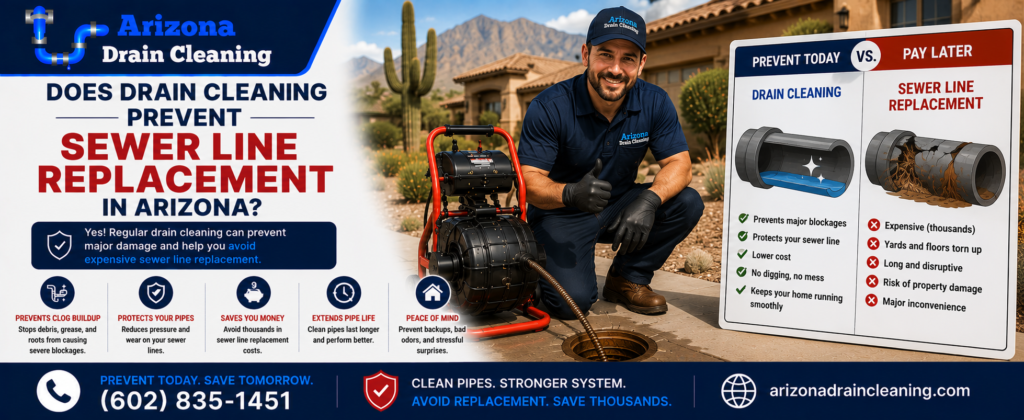
Drain and sewer infrastructure that is regularly cleaned, inspected, and maintained simply lasts longer than infrastructure that is ignored until failure. In Arizona, where hard water mineral scale accelerates corrosion and narrows pipe diameter over time, regular hydro jetting removes that scale before it causes structural damage. Camera inspections identify minor cracks or root intrusions before they become pipe collapses. Grease trap service prevents the pressure buildup that stresses pipe joints.
For property managers and the ownership groups they represent, extending the useful life of drain and sewer infrastructure defers capital replacement costs. That deferred replacement cost is a direct financial return on the investment in preventive maintenance.
Vendor Relationship and Institutional Knowledge
A drain maintenance contract builds an ongoing relationship with a service provider who learns your properties. Over time, your maintenance contractor develops institutional knowledge about which drains in which buildings have recurring issues, what the history of each system looks like, and what interventions have worked before. That knowledge makes each service visit more efficient and more effective than sending a new vendor who is encountering your system for the first time.
For property managers overseeing large or complex portfolios across the Phoenix valley or other Arizona markets, that continuity of vendor knowledge is genuinely valuable.
Types of Properties That Benefit Most from Drain Maintenance Contracts
Multi-Unit Residential Complexes
Apartment communities, condominium buildings, and townhome developments in the Phoenix, Tempe, Scottsdale, and Mesa markets generate high volumes of daily drain use across many units simultaneously. Hair, soap scum, food waste, paper products, and the ever-present Arizona hard water mineral buildup accumulate steadily in both individual unit drains and in the shared main lines serving entire buildings. A drain maintenance contract covering scheduled cleaning of main sewer lines, video inspection of lateral lines, and emergency response priority keeps these properties running smoothly without disrupting residents.
Commercial Office Buildings
Large office buildings in the Phoenix CBD, Scottsdale, Tempe, and Chandler generate steady restroom, kitchen, and break room drain use across multiple floors and tenant suites. Soap residue, paper, and biofilm accumulation in high-use restroom drain lines are consistent issues, and main sewer line condition in older commercial buildings requires regular attention. A maintenance contract appropriate to office building use typically involves annual hydro jetting of main lines, semi-annual inspection of restroom drain stacks, and emergency priority coverage.
Retail and Mixed-Use Centers
Shopping centers and mixed-use developments present a complex drainage management challenge because the tenant mix varies enormously. A food court anchor and a dry cleaner and a nail salon and a clothing retailer all generate different waste streams entering the same drainage infrastructure. A drain maintenance contract for a retail center or mixed-use property needs to address the highest-demand areas including food service tenant grease interceptors, high-traffic restroom drain lines, and shared exterior drainage systems while providing overall system coverage.
Hotel and Hospitality Properties
Hotels combine the drainage demands of a food service operation, a laundry facility, and a multi-unit residential building in a single property. Guest room drain stacks accumulate soap, hair, and personal care product residue. Commercial laundry drains collect lint and detergent buildup. Kitchen and restaurant drains handle grease and food waste. A comprehensive drain maintenance contract for a hotel property addresses all of these systems on schedules calibrated to the specific volume and operational patterns of that property.
Industrial and Warehouse Properties
Manufacturing facilities, auto service centers, and warehouse properties in areas like the West Valley including Goodyear, Avondale, and Surprise, generate drain waste containing petroleum residues, industrial solvents, metal particles, and cleaning chemicals. Drain maintenance contracts for these properties require service providers with appropriate equipment and waste disposal protocols to handle regulated materials in compliance with Arizona Department of Environmental Quality requirements.
How to Evaluate a Drain Maintenance Contract Provider in Arizona
Demonstrated Commercial Experience
A drain maintenance contract for a multi-building property portfolio or a complex commercial property is not something to entrust to a residential plumber or a general handyman service. Look for providers with documented experience serving commercial and multi-unit properties at scale, with the industrial-grade hydro jetting equipment, vacuum trucks, and camera inspection technology that serious commercial drainage work requires.
Transparent Scope Documentation
Every service visit under a maintenance contract should be backed by written scope documentation that tells you exactly what was done, what was found, and what if anything requires follow-up. A provider who is vague about what the contract covers or reluctant to document findings in writing is not a suitable long-term maintenance partner.
References from Similar Properties
Ask potential drain maintenance providers for references specifically from property managers overseeing similar property types in Arizona. A provider who can point to a track record with apartment communities in Mesa or commercial centers in Scottsdale is a meaningfully different conversation than a provider who is new to contract work.
Compliance Knowledge
Your drain maintenance provider should understand the regulatory landscape applicable to your property types, including Arizona health department requirements for grease interceptor maintenance, municipal discharge standards, and the documentation requirements associated with the Arizona Residential Landlord and Tenant Act. A knowledgeable provider helps you stay ahead of compliance obligations rather than scrambling to catch up after an inspection or complaint.
Emergency Response Capability
Verify that emergency response commitments are contractually specific, not just verbal assurances. The contract should state response times clearly and specify how after-hours and weekend emergencies are handled. For property managers managing properties across Maricopa, Pima, or Pinal County, geographic response capability matters as well.
Setting Up a Drain Maintenance Program Across Multiple Properties
One of the most practical questions property managers ask is how to structure a drain maintenance program when they are managing multiple properties with different characteristics. The answer is a tiered approach calibrated to the risk and demand profile of each property.
Property Assessment First
Before a contract is structured, a quality drain maintenance provider should conduct an initial assessment of each property in your portfolio. This assessment documents the existing condition of drain lines through camera inspection, identifies any immediate issues requiring remediation, and establishes a baseline understanding of each system. This assessment informs the service schedule and pricing for each property.
Service Tiers by Property Type and Use
A high-volume restaurant property in Scottsdale warrants far more frequent service than a small office building in Gilbert. Your contract structure should reflect those differences with service tiers appropriate to each property rather than a one-size-fits-all schedule. A good maintenance provider helps you calibrate these tiers based on actual inspection findings rather than generic assumptions.
Consolidated Billing and Reporting
For property managers handling multiple properties, consolidated billing and a unified reporting system across all properties under the contract simplifies administration considerably. You want a single point of contact, a single invoice covering all properties, and a reporting dashboard or documentation system that tracks service history, upcoming scheduled visits, and any outstanding recommendations across your entire portfolio.
Annual Program Review
A well-structured drain maintenance contract includes an annual review meeting between the property manager and the service provider to evaluate program performance, review any recurring issues, adjust service frequencies based on actual findings over the contract year, and plan for any capital recommendations identified during inspections. This review process keeps the program calibrated to the actual condition and needs of your properties rather than running on autopilot.
FAQs
Are drain maintenance contracts worth the cost compared to paying per service call?
In most cases, yes, particularly for commercial properties and multi-unit residential complexes with active tenant use. The savings come from three directions: lower per-visit pricing under contract rates compared to emergency call pricing, the cost avoidance achieved by catching problems before they become failures, and the reduction in tenant disruption costs that drain backups and odor complaints carry.
What happens when an inspection finds a problem that requires repair beyond routine maintenance?
A transparent drain maintenance contract distinguishes clearly between scheduled preventive maintenance services and repairs or replacements that fall outside the routine scope. When an inspection identifies a cracked pipe, a root intrusion requiring sewer line repair, or a grease trap that needs replacement, that work is typically proposed as a separate service. The value of having an ongoing maintenance relationship is that these issues are identified early and addressed on your timeline rather than discovered in an emergency.
How do drain maintenance contracts handle monsoon season in Arizona?
This is an important Arizona-specific consideration. Monsoon events between June and September regularly introduce sand, gravel, organic debris, and runoff sediment into commercial and residential drainage systems across the Phoenix valley and other Arizona communities. A well-structured maintenance contract should include a post-monsoon inspection or cleaning visit either as part of the standard schedule or as an optional add-on, given the additional load that storm season places on drainage systems.
Can a drain maintenance contract be structured to cover multiple property types in one agreement?
Yes, and many property management companies prefer consolidated contracts covering their entire portfolio under a single agreement with tiered service schedules for different property types. This simplifies vendor management, often provides better pricing through volume, and gives the service provider a complete picture of your infrastructure needs.
Drain Maintenance Contracts and Your Property’s Long-Term Asset Value
Commercial real estate and multi-unit residential properties in Arizona are significant investments. The condition of mechanical and infrastructure systems, including drainage, directly affects valuation, insurance rates, the quality of tenants your property attracts, and the return you generate for ownership groups.
A property with documented, consistent drain maintenance history presents better in due diligence processes. It demonstrates responsible asset management. It reduces the likelihood of deferred maintenance adjustments in transaction negotiations. And it reflects the kind of professional operational discipline that separates well-managed properties from poorly managed ones in a competitive market.
For property managers, a drain maintenance contract is not just an operational tool. It is part of how you build a reputation as a reliable steward of the assets you manage.
Call Arizona Drain Cleaning at (602) 835-1451 right now to schedule a drain cleaning before the next stage of that escalation arrives. Same-day availability for urgent situations, upfront pricing before any work begins, and ROC-licensed technicians who understand what Arizona’s specific conditions do to drain systems that are not maintained.