Sludge removal for commercial properties in Arizona is not optional maintenance. It is a critical part of keeping your drainage infrastructure functional, your business compliant, and your property protected from the kind of damage that quietly compounds until it becomes a very expensive emergency.
Arizona’s environment is uniquely unforgiving on commercial plumbing systems. Between the extreme heat, notoriously hard water loaded with calcium and magnesium minerals, and the heavy daily use that commercial buildings experience, sludge accumulates faster here than in most other parts of the country. Restaurants, hotels, office complexes, retail centers, medical facilities, and industrial warehouses across Phoenix, Scottsdale, Mesa, Glendale, Tempe, Chandler, and Gilbert all share this challenge.
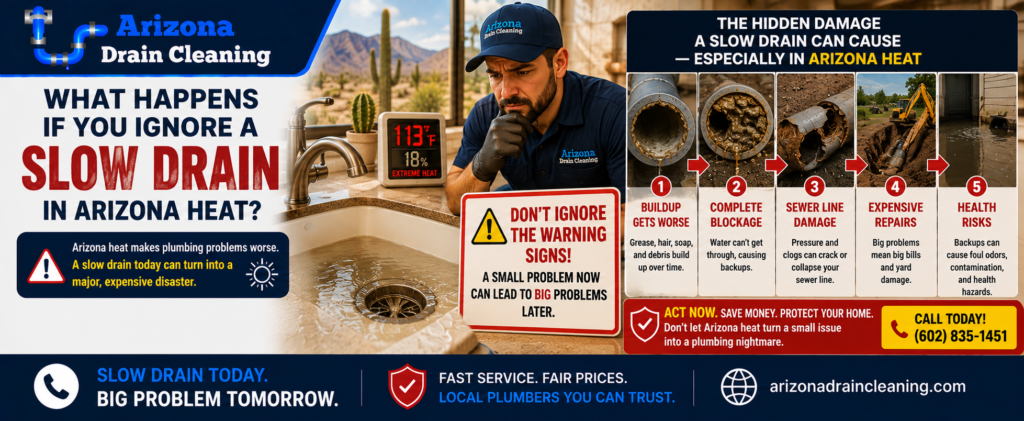
In many cases, sludge buildup develops gradually. Grease, sediment, organic waste, mineral deposits, and other debris begin collecting along pipe walls, inside catch basins, grease traps, and drainage systems. Over time, these materials combine into a dense sludge that restricts flow, reduces system efficiency, and increases the risk of backups and costly repairs.
Here is what is happening inside commercial drainage systems over time:
| Stage | What Is Building Inside the System | What Property Owners Notice |
|---|---|---|
| Early stage | Light sediment, grease, and debris accumulation | Minor drainage slowdowns |
| Developing buildup | Thickening sludge deposits along pipe walls | Frequent drainage issues and reduced flow |
| Heavy blockage | Significant sludge restricting system capacity | Standing water, backups, and operational disruptions |
| Advanced buildup | Extensive sludge accumulation with bacterial growth | Severe backups, odors, compliance concerns, and potential property damage |
Once sludge begins to accumulate, it rarely remains isolated. The buildup continues attracting additional debris, narrowing flow pathways and creating conditions that accelerate future accumulation.
What Is Sludge and Why Does It Form in Commercial Drain Systems?
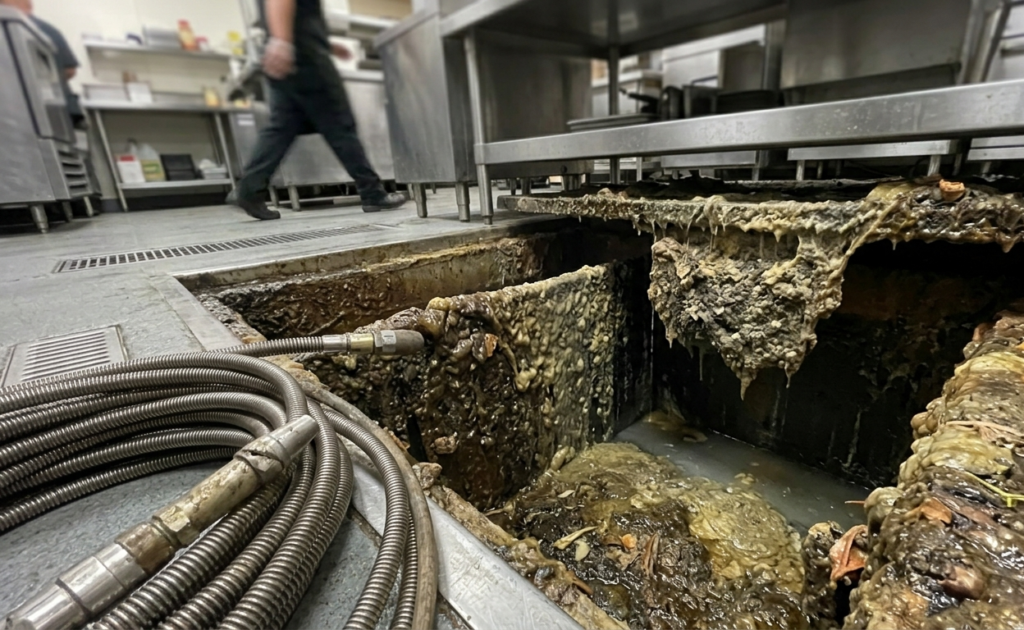
Sludge is a dense, sticky accumulation of organic waste, fats, oils, grease, soap residue, biofilm, mineral scale, sediment, and decomposed debris that lines the interior walls of drain pipes, sewer lines, septic tanks, and grease interceptors over time.
In commercial settings, the volume and variety of waste entering drainage systems is significantly higher than in a typical residential property. A single commercial kitchen can discharge hundreds of gallons of greasy wastewater every day. A multi-tenant office building generates heavy soap and paper waste. A hotel accumulates hair, soap scum, food waste, and mineral deposits across dozens or even hundreds of drain points simultaneously.
Arizona’s hard water compounds this problem considerably. The tap water running through Phoenix and surrounding municipalities carries elevated levels of dissolved calcium, magnesium, and other minerals. As water moves through your pipes and evaporates or heats up, those minerals precipitate out and adhere to the pipe walls. This mineral scale creates a rough surface that traps grease, organic waste, and debris far more effectively than a clean, smooth pipe would. The result is an accelerating cycle where each layer of buildup makes the next layer accumulate faster.
Add Arizona’s intense heat to that equation. Pipe interiors can reach temperatures that accelerate bacterial activity and organic decomposition, thickening the biofilm and sludge layer more rapidly than property owners typically expect.
Why temporary fixes rarely solve the problem
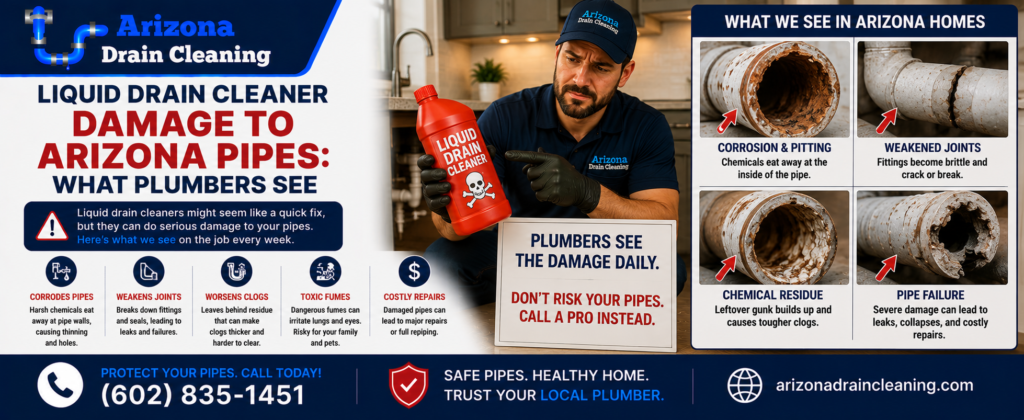
| Method | Short-Term Result | Long-Term Outcome |
| Chemical treatments | Temporary improvement in flow | Sludge remains throughout the system |
| Basic flushing | Removes some loose debris | Heavy deposits remain attached to surfaces |
| Spot cleaning | Addresses isolated problem areas | Underlying buildup continues to grow |
The challenge is that many temporary solutions only restore limited flow rather than fully removing sludge from the system. As a result, problems often return quickly and become more severe over time.
Types of Commercial Properties That Require Regular Sludge Removal in Arizona
Restaurants and Food Service Facilities
Commercial kitchens are the most sludge-intensive environments in any property portfolio. Fats, oils, and grease from cooking operations enter the drainage system in enormous volumes throughout every shift. Without consistent grease trap pumping and drain line cleaning, this material solidifies inside pipes and in grease interceptors, eventually causing complete blockages and foul odors that affect both staff and customers.
Arizona’s health code regulations require food service establishments to maintain their grease interceptors on a schedule sufficient to prevent overflow and contamination. Non-compliance carries real consequences, including fines, operational shutdowns, and liability.
Retail and Office Buildings
Large commercial office complexes and retail centers rely on floor drains, restroom facilities, break room drains, and central sewer lines that serve many people daily. Soap residue, paper waste, and biofilm accumulate steadily in these systems. The slow, gradual nature of this buildup means it often goes unnoticed until drains begin backing up or odors reach tenant spaces.
Hotels and Hospitality Properties
Hotels present one of the most complex sludge scenarios in commercial real estate. Kitchen and restaurant drains handle grease and food waste. Guest room plumbing accumulates hair, soap, and personal care product residue. Laundry facilities discharge lint, detergent, and fabric softener buildup. All of these systems eventually require professional sludge removal to maintain proper drainage and guest experience.
Industrial and Warehouse Facilities
Manufacturing facilities, auto repair shops, and warehouses often deal with specialized sludge containing petroleum residues, chemical waste, metal shavings, and industrial lubricants. These materials are particularly hazardous and require sludge removal professionals with the proper equipment and disposal protocols to handle them in compliance with Arizona environmental regulations.
Medical and Dental Offices
Healthcare facilities generate wastewater containing pharmaceutical compounds, cleaning agents, and biological materials. Sludge in medical facility drain lines can harbor pathogens and create serious infection control concerns if not addressed on a consistent schedule.
Warning Signs That Your Commercial Property Has a Sludge Problem
Catching sludge buildup early is significantly cheaper than dealing with the aftermath of a full blockage or system failure. Here are the most common indicators that your commercial drain system needs professional attention.
Slow Draining Throughout the Building
When multiple drains across different areas of your commercial property are running slowly at the same time, that is rarely a coincidence. It typically signals widespread sludge accumulation deep in your main sewer lines or throughout your lateral drain network, rather than a simple localized clog.
Persistent or Recurring Foul Odors
Sludge is a breeding ground for anaerobic bacteria that produce hydrogen sulfide and other gases responsible for the distinctive rotten egg or sewage smell that sometimes drifts up from commercial floor drains and restroom facilities. If professional drain cleaning has been done recently and odors have returned within a few months, it usually means the underlying sludge was never fully removed.
Frequent Backups in the Same Locations
A drain that backs up repeatedly despite being snaked or treated with chemical cleaners is sending a clear message. Standard drain snaking punches a hole through a blockage, but does not remove the sludge coating the pipe walls. The clog reforms quickly because the root cause, the thick sludge layer, was never addressed.
Gurgling or Bubbling Sounds from Drains
Air trapped behind sludge and partial blockages in your drainage system creates gurgling sounds when water tries to pass through. This is one of the earliest mechanical warnings a drainage system gives before a full backup occurs.
Rising Utility Costs Without an Obvious Cause
Significant sludge accumulation in commercial HVAC drainage systems, floor drain networks, or septic systems can contribute to elevated water usage, pump cycling inefficiency, and increased maintenance call-outs, all of which affect operating costs over time.
How Professional Sludge Removal Works for Commercial Properties
Step 1: Video Camera Inspection
Modern commercial sludge removal always begins with a diagnostic camera inspection. A high-resolution video camera is fed through the drain or sewer line to visually assess the exact location, extent, and character of the sludge and blockage. This step eliminates guesswork, allows technicians to identify any structural damage like cracked pipes or root intrusion, and informs the removal strategy. It also gives property managers documented evidence of the condition of their drainage system before and after service.
Step 2: Developing a Removal Strategy
Not all commercial sludge problems are identical. A grease-heavy restaurant drain line requires a different approach than a mineral-scaled office building sewer main or a sediment-filled industrial floor drain. After camera inspection, trained technicians design a targeted removal plan based on the type of sludge present, the pipe material, the diameter of the line, and the overall system configuration.
Step 3: Hydro Jetting
Hydro jetting is the gold standard for commercial sludge removal in Arizona. This process uses highly pressurized water, typically ranging from 2,000 to 4,000 PSI, depending on the pipe and the severity of buildup, delivered through a specialized nozzle that rotates and propels water both forward and backward along the pipe walls.
The pressurized water stream physically scours sludge, grease, mineral scale, biofilm, and organic debris from the interior walls of the pipe and flushes it out of the system entirely. Unlike drain snaking, which simply punches through a clog, hydro jetting removes the entire layer of material coating the pipe and restores the full diameter of the drain. This is particularly effective in Arizona, where hard water scale combined with grease creates extremely dense, adherent deposits.
Step 4: Vacuum Extraction
For septic tanks, grease interceptors, lift stations, and floor drain sumps, hydro jetting is typically combined with industrial vacuum extraction. Powerful vacuum trucks remove the dislodged sludge, liquid waste, and debris from the system entirely. This is especially important for grease traps and septic components, where the waste cannot simply be flushed further down the line.
Step 5: Post-Removal Inspection and Documentation
After sludge removal is complete, a follow-up camera inspection confirms that the work has been done thoroughly and that the drain lines are flowing at full capacity. Professional drain cleaning companies serving commercial clients in Arizona provide documented reports of both the pre-service condition and the post-service result, which is valuable for property management records and regulatory compliance documentation.
How Often Should Commercial Properties in Arizona Schedule Sludge Removal?
The honest answer is that it depends on your property type, drainage system size, and the volume of waste your operations generate. That said, industry practice and Arizona regulatory requirements provide some useful benchmarks.
Commercial Kitchens and Restaurants
Grease traps typically require pumping every one to three months, depending on volume. Main drain lines serving commercial kitchens benefit from hydro jetting and sludge removal at least twice per year. High-volume operations may need quarterly service.
Office Buildings and Retail Centers
Main sewer line cleaning and sludge inspection once per year is a reasonable baseline for most commercial office and retail properties. Buildings with older plumbing, hard water conditions, or a history of backups may benefit from semi-annual service.
Hotels and Multi-Unit Properties
Given the complexity and volume of drainage in hotel properties, a comprehensive sludge removal and inspection program covering kitchen drains, laundry drains, guest room stacks, and main sewer lines at least once per year is advisable. Emergency access to professional drain cleaning should also be contractually arranged.
Industrial and Medical Facilities
These properties often require customized maintenance schedules developed in coordination with their drain cleaning provider and, in some cases, Arizona environmental regulators. The specific waste stream generated by each facility determines the appropriate frequency.
What regular sludge removal actually prevents
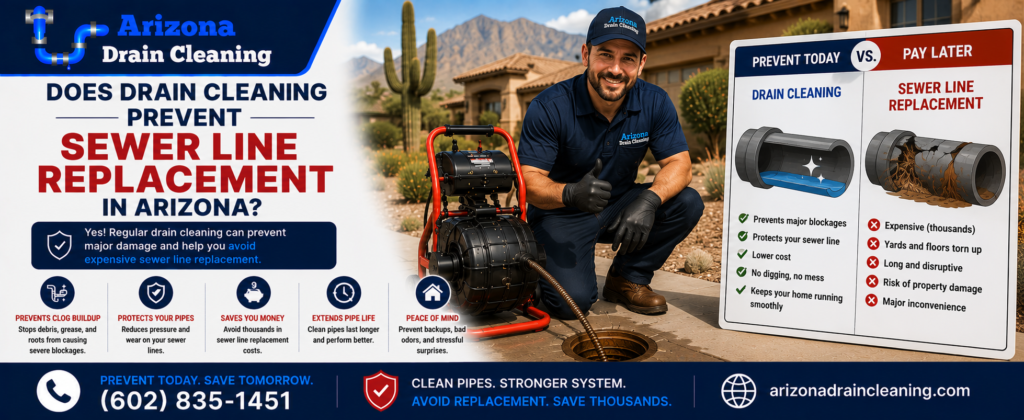
| Benefit | Result |
| Improved drainage performance | Maintains proper flow throughout the system |
| Reduced risk of backups | Helps prevent costly interruptions and property damage |
| Regulatory compliance support | Assists businesses in meeting maintenance requirements |
| Extended infrastructure lifespan | Reduces wear and stress on drainage components |
The difference between routine sludge removal and emergency remediation often comes down to timing. Addressing buildup early is typically far less expensive than responding to a major blockage, overflow, or system failure.
Why Arizona’s Climate Makes Sludge Removal Even More Important
Most commercial property owners in other states can afford to treat drain maintenance as a lower-priority item. Arizona property owners do not have that luxury.
Hard water is pervasive throughout the Phoenix metropolitan area, Tucson, and communities across Maricopa, Pima, and Pinal counties. The calcium and magnesium deposits that accumulate inside pipes act like an arterial plaque, progressively narrowing the internal diameter of drain lines and providing a rough surface that catches and holds grease, soap, and organic waste far more aggressively than pipes in softer-water regions.
Extreme heat accelerates the growth of biofilm inside drain lines, thickens grease deposits, and increases bacterial activity that produces foul gases, and further degrades organic material into sticky sludge. The same temperatures that strain your HVAC system are working on your drainage infrastructure below the surface.
Monsoon season adds another dimension. Flash flooding events that periodically affect commercial properties across the Phoenix valley and other Arizona communities can introduce sand, debris, and sediment into drainage systems, compounding sludge accumulation significantly in a short period of time.
The Real Cost of Ignoring Sludge Removal in a Commercial Property
Property managers and business owners sometimes defer sludge removal as a cost-saving measure. The actual financial logic runs in the opposite direction.
A complete sewer line backup that floods a commercial kitchen, retail floor, or office space during business hours typically costs many times more than a year’s worth of preventive drain maintenance. There is the immediate cost of emergency drain service, which carries premium pricing. There is the cost of water damage remediation. There is lost revenue during downtime. There is potential damage to inventory, equipment, and interior finishes. In a restaurant setting, a health code violation triggered by a sewer backup can result in a temporary closure that affects revenue and customer trust for months.
Pipe damage is another cost vector. Sludge that hardens inside pipes creates pressure imbalances and accelerates corrosion. In Arizona’s older commercial buildings, where galvanized steel or older cast iron pipes are still common, sludge-related corrosion can lead to pipe failure that requires full replacement rather than simple cleaning.
Regulatory exposure is a third consideration. Grease traps that overflow due to deferred maintenance and septic systems that discharge improperly can trigger investigations by the Arizona Department of Environmental Quality and local municipal authorities.
Preventive sludge removal is, by any practical measure, one of the most cost-effective maintenance investments a commercial property owner in Arizona can make.
Choosing the Right Sludge Removal Company for Your Arizona Commercial Property
Not every drain cleaning company has the equipment, licensing, and experience to handle commercial-scale sludge removal effectively. When evaluating service providers, there are several things worth looking for.
Commercial Experience and Proper Equipment
Commercial drain systems are fundamentally different from residential ones. The pipe diameters are larger, the volumes are greater, the sludge is often more complex, and the consequences of a poor job are more significant. Look for providers who work with commercial properties routinely and who operate industrial-grade hydro jetting equipment and vacuum extraction trucks.
Transparent Inspection Process
Any professional sludge removal company serving commercial clients should perform a camera inspection before and after the job. If a provider wants to skip this step, that is a signal their process lacks the diagnostic rigor that commercial work requires.
Compliance Awareness
Arizona commercial properties are subject to grease trap regulations, septic system regulations, and environmental discharge standards. A knowledgeable service provider understands these requirements and handles waste disposal in accordance with applicable regulations.
Emergency Availability
Sludge-related blockages do not always announce themselves during business hours. Commercial property managers benefit from working with a drain cleaning company that offers emergency response availability so that a backup at 11 PM on a Friday does not sit unaddressed until Monday.
Sludge Removal and Your Commercial Property’s Long-Term Value
Beyond the operational benefits, a properly maintained drainage system directly supports the long-term asset value of a commercial property in Arizona. Buyers, investors, and tenants conducting due diligence on a commercial property evaluate the condition of mechanical and plumbing systems as a significant component of overall property health.
A history of documented, proactive drain maintenance, including sludge removal, tells a story of responsible property management. A history of emergency repairs, code violations, and deferred maintenance tells a different story. In Arizona’s competitive commercial real estate market, the difference matters.
Properties with well-maintained drainage infrastructure also tend to have lower insurance claim histories, fewer tenant complaints, and better long-term operating cost profiles, all of which contribute to favorable valuations.
Frequently Asked Questions
What is the difference between drain snaking and hydro jetting for sludge removal?
Drain snaking uses a mechanical cable to break through a clog, but it does not remove the sludge coating the pipe walls. Hydro jetting uses high-pressure water to scour the entire interior surface of the pipe clean. For commercial sludge removal, hydro jetting provides a far more complete and durable result.
Is hydro jetting safe for older commercial pipes?
In most cases, yes. Professional technicians assess pipe condition through camera inspection before applying hydro jetting, and they calibrate water pressure to match the pipe material and condition. This approach is safe for most pipe types, including PVC, cast iron, clay, and ABS.
How long does commercial sludge removal typically take?
Service time varies based on the size of the system and the severity of the buildup. A standard commercial drain line cleaning can often be completed within two to four hours. Larger systems, septic tank pumping, or grease interceptor service may take longer. Emergencies are handled as a priority regardless of complexity.
Can sludge removal eliminate foul odors?
In most cases, professional sludge removal eliminates the source of odors rather than simply masking them. Once the organic material and biofilm responsible for gas production are removed and the pipes are flowing cleanly, odors dissipate. Recurring odors after cleaning may point to a structural issue like a cracked pipe or a dry drain trap that requires separate attention.
Call Arizona Drain Cleaning at (602) 835-1451 right now to schedule a drain cleaning before the next stage of that escalation arrives. Same-day availability for urgent situations, upfront pricing before any work begins, and ROC-licensed technicians who understand what Arizona’s specific conditions do to drain systems that are not maintained.