If your drain is slow or completely blocked, the first thing most people grab is a bottle of chemical drain cleaner from the nearest grocery store. It is cheap, it is right there on the shelf, and the label promises results in 30 minutes. But here is the truth that bottle will not tell you: using chemical drain cleaners repeatedly can cause more damage to your plumbing system than the clog itself ever could. This comparison breaks down exactly how drain cleaning chemicals work, what professional drain cleaning actually involves, what each option costs you in the short and long run, and when it is time to stop reaching for the bottle and call a licensed plumber instead.
Drain Cleaning Chemicals vs Professional Service: A Direct Comparison
| Factor | Chemical Cleaners | Professional Service |
| Upfront Cost | $5 to $20 per bottle | $100 to $300+ per visit |
| Long-Term Cost | High (repeated purchases + pipe damage) | Low (one-time fix, no recurring damage) |
| Effectiveness | Partial, temporary | Complete, lasting |
| Pipe Safety | Damaging with repeated use | Safe, often improves pipe condition |
| Health Risk | High (fumes, burns) | Minimal |
| Environmental Impact | Harmful | Minimal to none |
| Septic Safe | Often not | Yes, with proper methods |
| Addresses Root Cause | No | Yes |
What Are Drain Cleaning Chemicals and How Do They Work?
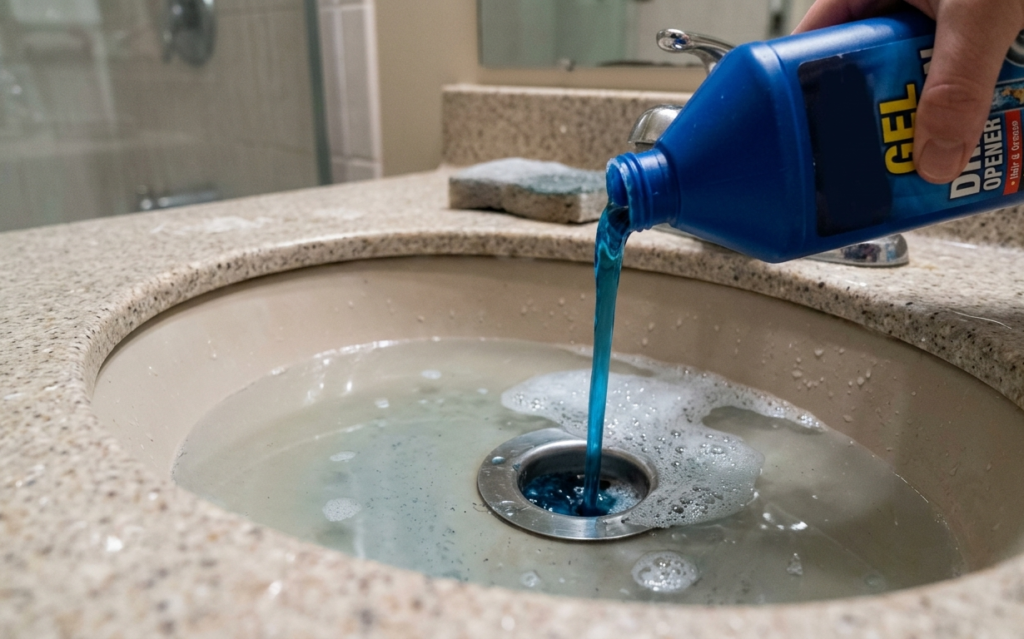
Chemical drain cleaners are store-bought products designed to dissolve organic blockages in your pipes. They come in liquid, gel, and foam formulations and are widely available under brand names like Drano and Liquid-Plumr. The active ingredients typically include sodium hydroxide (lye), potassium hydroxide, or sulfuric acid. Some formulas also contain thioglycolic acid specifically to break down hair.
The mechanism is straightforward: these chemicals are denser than water, so they sink through standing water to reach the clog. Once there, they trigger a chemical reaction that generates intense heat, sometimes reaching temperatures of up to 200 degrees Fahrenheit, which breaks down the organic material, causing the blockage. The dissolved material then flushes through the pipe with running water.
That process sounds effective on paper. In practice, it comes with a long list of consequences that most homeowners only discover after repeated use.
The Types of Chemical Drain Cleaners
There are three main categories you will find on store shelves:
Caustic cleaners use alkaline compounds like sodium hydroxide. They convert grease into a soap-like substance that can be flushed away. These are the most common and the most corrosive to your pipe walls.
Oxidizing cleaners use peroxide-based compounds that release gas and heat. They break down organic matter by removing electrons from the clog material. These are often marketed as “safer” but still generate damaging heat inside your pipes.
Acid cleaners contain sulfuric acid or hydrochloric acid and are the most aggressive formulations. They are so potent that most acid-based products are reserved for professional or commercial use only, though some end up in the hands of homeowners who assume stronger means better.
The Hidden Costs of Chemical Drain Cleaners
They Damage Your Pipes Over Time
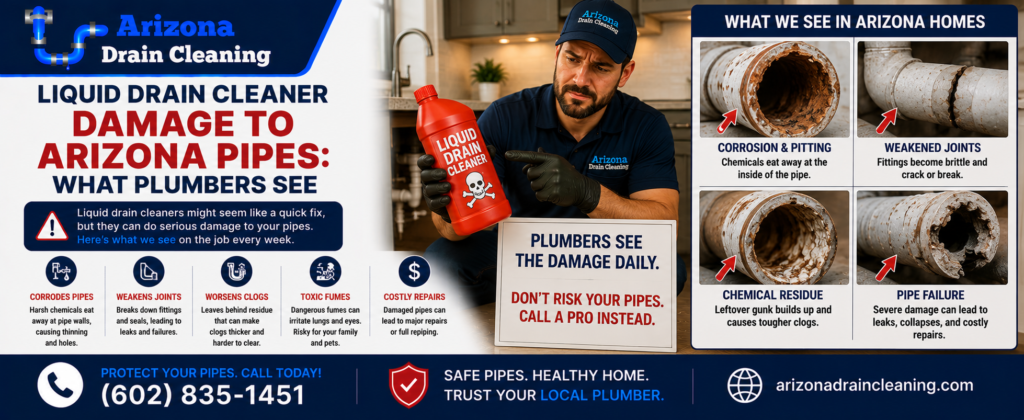
This is the most important point and the one chemical drain cleaner manufacturers do not advertise. When sodium hydroxide or sulfuric acid reacts inside your pipes, the heat and chemical exposure eat away at the pipe lining. PVC pipes, which are standard in many newer homes, can warp or soften after repeated exposure. Even metal pipes like copper and galvanized steel are not immune since acid-based cleaners corrode them from the inside out.
When used extensively or on a routine basis, chemical drain cleaning products can corrode pipe walls to such an extent that DIY fixes become impossible. Through heavy use of commercial cleaners, a minor sink clog can potentially turn into a full pipe collapse.
What begins as a ten-dollar fix can quietly snowball into a pipe replacement job worth hundreds or thousands of dollars. The damage is not always visible either. It builds up gradually until something gives way, usually at the worst possible moment.
They Rarely Solve the Actual Problem
Chemical cleaners do not fully remove the clog. They break it down just enough for some water to pass through. The leftover residue sticks to the interior of the pipe, creating the perfect environment for new clogs to form faster. Over time, this cycle of pouring in more chemicals worsens the damage.
If a solid object such as a piece of jewelry, a toy, or paper is causing the blockage, chemical cleaners are essentially useless. They will sit in the pipe, eating at the walls while the blockage remains completely intact.
They Pose Serious Health Risks
Consumer Reports labels chemical drain cleaners as among the most dangerous household products. Just by breathing in the fumes, you can experience stinging and irritated eyes and throat. Chemical cleaners can also burn through human skin, leaving behind open sores and rashes.
The fumes from chemical drain cleaners can irritate the nose, throat, and lungs, potentially triggering asthma or respiratory issues. If the product comes into contact with skin or eyes, it can cause chemical burns, severe irritation, or even blindness.
Households with children, elderly residents, or anyone with pre-existing respiratory conditions are at particularly elevated risk from repeated exposure to these fumes.
They Harm the Environment
When you pour these harsh chemicals down your drain, they do not simply disappear. They eventually make their way into local waterways, where they can persist for an extended period. Some compounds found in caustic and oxidizing cleaners can take months or even years to fully degrade, during which time they continue to harm aquatic ecosystems and affect fish, plants, and other wildlife.
In Arizona specifically, where water conservation and water quality are significant concerns, adding corrosive compounds to the drainage system is a choice that carries real environmental consequences.
They Can Destroy Septic Systems
If you rely on a septic system, chemical drain cleaners can disrupt the delicate balance of beneficial bacteria that helps break down waste. This disruption can lead to costly repairs or even complete system failure. A septic system replacement is one of the most expensive home repairs a property owner can face, and repeatedly using chemical drain cleaners is one of the fastest ways to cause that kind of damage.
What Professional Drain Cleaning Actually Involves
A licensed plumber does not just pour something into your drain and hope for the best. Professional drain cleaning is a diagnostic and mechanical process that gets to the root of the problem instead of temporarily masking it.
Video Camera Inspection
Before a professional touches your pipes, they will often run a drain camera through the line. This small waterproof camera feeds live footage back to the technician, revealing exactly where the blockage is, what caused it, and what condition your pipe walls are in. This step alone is worth its weight in gold because it means no guesswork, no unnecessary work, and no missed underlying issues like tree root intrusion, pipe corrosion, or a misaligned joint.
Drain Snaking and Augering
A drain snake, also known as a plumber’s auger or plumber’s cable, is typically around 50 feet long and has an auger at the end. The plumber spirals the snake down into the drain where it comes into direct contact with whatever is causing the clog and clears it away by physically breaking through it. Unlike chemical cleaners, snaking physically removes the blockage rather than partially dissolving it and leaving residue behind.
Hydro Jetting
For more stubborn or extensive buildup, hydro jetting is the gold standard. Hydro jetting cleans pipes through the use of high water pressure. After a video inspection, the plumber inserts a nozzle into the clogged drain or pipe. The nozzle then blasts water in multiple directions through high-pressure jet streams as it moves through the pipe. Hydro jetting is highly effective at removing all kinds of pipe clogging material including food, hair, fabric, congealed grease, and even silt or scale buildup.
The result is not just a cleared clog but a thoroughly cleaned pipe that flows the way it did when it was first installed. No chemical residue, no leftover debris, and no weakened pipe walls.
Bio-Enzymatic Treatments
For ongoing maintenance, many professional plumbing services now use bio-enzymatic cleaners as a finishing treatment. These professional-grade products utilize good bacteria to generate enzymes that break down organic debris without damaging the pipe walls. They are biodegradable, non-toxic, and completely safe for septic systems, making them the responsible choice for routine drain health.
When Chemical Cleaners Might Be Acceptable
Let us be fair. There are limited circumstances where a chemical drain cleaner might be a reasonable short-term measure.
If you have a very minor, shallow clog caused by soap scum or light hair buildup near the drain opening, a single use of a lower-concentration product might provide temporary relief until you can schedule a professional visit. However, this should never become a habit. One-time emergency use is very different from reaching for the bottle every few weeks.
Even in these cases, a plunger or manual drain strainer would be the safer first attempt. Using a plunger creates mechanical pressure to dislodge the blockage without any chemical damage whatsoever.
Signs You Need Professional Drain Cleaning, Not a Chemical Product
Recurring Clogs in the Same Drain
If the same drain keeps blocking up every few weeks despite repeated treatments, the problem is not the clog you can see. It is something deeper in the line. A professional can identify whether grease buildup, mineral scale, pipe damage, or root intrusion is causing the recurring issue and resolve it at the source.
Multiple Drains Backing Up Simultaneously
When more than one fixture backs up at the same time, the blockage is almost certainly in the main sewer line rather than an individual branch line. This is a serious situation that no store-bought product can touch. A plumber with a camera inspection and hydro jetting equipment is the only appropriate response.
Foul Odors Coming From Drains
Persistent sewage smells coming from your drains indicate decomposing organic matter deep in the line, or in some cases, a venting issue or even a cracked sewer pipe. Chemical cleaners will not fix any of these scenarios and may mask the smell temporarily while the underlying problem worsens.
Gurgling Sounds in Your Pipes
Gurgling noises after water drains indicate trapped air in the system, usually because a partial blockage is preventing normal flow and venting. This is a mechanical problem that requires a mechanical solution.
Standing Water That Drains Very Slowly
A drain that takes more than a minute to clear standing water is a drain with a significant partial blockage. At this stage, using chemicals risks leaving a pool of caustic solution sitting in contact with your pipe walls for an extended period, which is exactly the condition most likely to cause long-term pipe damage.
The True Cost Comparison Over Time
Many homeowners choose chemical drain cleaners because they appear to be the affordable option. That reasoning deserves a closer look.
A bottle of chemical drain cleaner costs between $5 and $20. However, if a particular drain clogs every two months, that adds up to $30 to $120 per year on that one drain. Across a full household with a kitchen sink, bathroom sinks, shower drains, and a laundry drain, the annual spend on chemical products can easily reach $200 or more, all without solving anything.
Meanwhile, each application weakens your pipes incrementally. Chemical cleaners that corrode your pipes may eventually cause leaks, water damage, or even burst pipes, all of which result in repairs that can cost hundreds or thousands of dollars.
A single professional drain cleaning service that fully resolves a problem, prevents it from recurring, and leaves your pipes in better condition than before is genuinely the more economical choice when viewed across a two or three-year window.
How Arizona’s Climate Affects Your Drain Health
Arizona homeowners face some specific plumbing considerations that make professional maintenance especially worthwhile. The hard water found throughout the Phoenix metro area and surrounding regions carries high concentrations of calcium and magnesium. Over time, these minerals deposit as scale inside pipe walls, gradually narrowing the interior diameter and creating the ideal surface for grease and debris to cling to.
Chemical drain cleaners do nothing to address mineral scale. Hydro jetting, on the other hand, strips those deposits from pipe walls and restores full flow capacity. For Arizona homeowners dealing with hard water issues, professional drain cleaning is not just about clearing a clog but about maintaining the overall efficiency and longevity of the entire plumbing system.
What to Expect During a Professional Drain Cleaning Service Call
If you have never scheduled a professional drain cleaning, knowing what to expect removes the hesitation. A licensed technician will:
Arrive and conduct a brief consultation about the symptoms you have been experiencing, such as slow drainage, bad odors, or recurring backups. They will then perform a visual and, if needed, camera-assisted inspection to identify the exact location and nature of the blockage. Based on what they find, they will recommend the appropriate method, whether that is snaking, hydro jetting, or a combination of both. After the service, they will typically run water to confirm full flow is restored and may provide recommendations for ongoing maintenance.
The entire process for a standard residential drain cleaning usually takes between one and two hours. A reputable service provider will walk you through what they found and what they did, so you leave the appointment understanding the condition of your plumbing.
Preventive Habits That Reduce the Need for Either Solution
The best drain cleaning is the kind you never need to do in the first place. A few consistent habits can significantly reduce blockage frequency in any household.
Install mesh drain strainers in every sink, shower, and tub. These inexpensive screens catch hair, food particles, and soap pieces before they enter the drain. Empty them weekly. Avoid pouring cooking grease, oils, or fats down the kitchen sink under any circumstances. Even small amounts accumulate into thick grease deposits over time. Coffee grounds are another common culprit and should go in the trash or compost rather than down the drain. Run hot water through your kitchen sink for 30 seconds after every use to keep grease moving through the line rather than solidifying against the pipe walls. For bathroom drains, a monthly flush with hot water helps dissolve soap scum before it builds up.
If you want a safe DIY maintenance routine, a mixture of baking soda followed by white vinegar and then hot water is a gentle, non-corrosive option for keeping drains fresh between professional visits. It will not clear a significant blockage, but it is a reasonable routine maintenance step that causes no harm to any type of pipe.
Frequently Asked Questions
Q: Are chemical drain cleaners safe to use occasionally?
Occasional use on a very minor, shallow clog may not cause immediate catastrophic damage, but no plumber will recommend it as a regular practice. Even a single use of a high-concentration acid or caustic formula can begin weakening older or already-stressed pipes. The safer occasional alternative is always a plunger or a manual drain snake before reaching for any chemical product.
Q: How long does a professional drain cleaning service take?
For a standard residential drain, a professional service call typically takes between one and two hours from inspection to completion. More complex situations involving the main sewer line, significant root intrusion, or extensive mineral scale buildup may take longer, but a good technician will communicate a realistic time estimate before starting the work.
Q: Can chemical drain cleaners damage PVC pipes specifically?
Yes, and this is one of the most common misconceptions homeowners have. Many people assume that because PVC is plastic rather than metal, it is immune to chemical damage. In reality, the intense heat generated by caustic and oxidizing drain cleaners can soften, warp, or crack PVC pipe material with repeated exposure, increasing the risk of leaks at joints and fittings.
Q: How often should I schedule professional drain cleaning?
For most households, once every 12 to 18 months is a reasonable maintenance interval. Homes with large families, older plumbing systems, hard water, or a history of recurring clogs benefit from annual professional cleaning. Kitchen drains in homes where cooking is frequent may need attention more often due to grease accumulation.
Q: What is the difference between drain snaking and hydro jetting?
Drain snaking uses a flexible metal cable with an auger tip to physically break through or pull out a blockage. It is effective for localized clogs caused by hair, soap buildup, or small debris. Hydro jetting uses highly pressurized water, typically between 1,500 and 4,000 PSI, to scour the entire interior surface of the pipe, removing not just the blockage but years of accumulated grease, mineral scale, and biofilm. Hydro jetting is a more thorough solution and is often recommended when snaking alone does not fully restore drainage flow.
Q: Will chemical drain cleaners work on a completely blocked drain with standing water?
Rarely, and the attempt often makes the situation worse. When a drain is fully blocked and standing water is present, the chemical product sits on top of that water rather than sinking through to the clog immediately. As the chemical slowly works its way down, it remains in prolonged contact with your pipe walls the entire time, causing maximum corrosion with minimum effectiveness. A plunger, a wet vacuum, or a call to a professional is a far better response to a fully blocked drain.
Q: Are enzyme-based drain cleaners a safe alternative to chemical cleaners?
Enzyme or bio-enzymatic drain cleaners are genuinely safer than acid or caustic chemical products. They use natural bacterial cultures to digest organic material like grease, soap scum, and food particles without generating heat or corroding pipe walls. They are also septic safe and environmentally friendly. The important limitation is that they work slowly and are not effective against severe or complete blockages. They are best used as a monthly preventive maintenance treatment rather than a reactive solution for an existing clog.
Q: How do I know if my drain problem requires a plumber or if I can handle it myself?
A single slow drain with a clearly identifiable cause, such as visible hair buildup near the drain opening, is a reasonable candidate for a DIY attempt with a plunger or manual drain hair remover. Any of the following situations should go straight to a professional: multiple drains backing up at the same time, foul sewer odors, gurgling sounds in the pipes, standing water that does not drain at all, or a drain that keeps clogging in the same spot within weeks of being cleared. These are signs of a deeper systemic issue that no store-bought product will fix.
Q: Does professional drain cleaning prevent future clogs?
Professional drain cleaning significantly reduces the likelihood of near-term recurrence, especially when hydro jetting is used, since it removes the layer of buildup along pipe walls that gives new debris something to cling to. However, no single service permanently prevents all future clogs. Consistent preventive habits like using drain strainers, avoiding grease disposal in sinks, and scheduling periodic professional maintenance are what keep a plumbing system running reliably over the long term.
Q: Is professional drain cleaning worth the cost compared to buying chemical products?
When you factor in the full picture, including repeated product purchases, the gradual pipe damage that leads to expensive repairs, and the fact that professional service actually resolves the problem rather than temporarily masking it, professional drain cleaning is consistently the more cost-effective choice over any period longer than a few months. A one-time professional service that eliminates a recurring clog is worth far more than a year’s worth of chemical treatments that never fully solve anything.
Call Arizona Drain Cleaning at (602) 835-1451 right now to schedule a drain cleaning before the next stage of that escalation arrives. Same-day availability for urgent situations, upfront pricing before any work begins, and ROC-licensed technicians who understand what Arizona’s specific conditions do to drain systems that are not maintained.