One slow drain is annoying, but multiple slow drains usually signal a bigger issue in your system. Understanding the difference between a branch clog and a main line blockage helps you act fast and avoid costly damage. Recognizing these signs early tells you exactly when to call for main drain cleaning service before the problem gets worse.
This guide explains exactly how your drain system is laid out, how to tell which type of blockage you have from the symptoms alone, and what to do and not do in each case.
Branch Drain vs. Main Line: At a Glance
| Branch Drain Clog | Main Line Blockage |
| Affects one fixture only | Affects multiple fixtures at once |
| Slow drain or backup at a single point | Cross-fixture symptoms (toilet → tub backup) |
| Common causes: hair, grease, soap, objects | Common causes: tree roots, grease buildup, pipe damage, scale |
| Urgent but not an emergency | Plumbing emergency — stop using water immediately |
| Snake or hydro jet the branch line | Main drain cleaning or sewer line cleaning required |
| DIY possible for surface clogs | Always requires a licensed professional |
| Typical cost: $100–$350 | Typical cost: $300–$1,500+ depending on cause |
How Your Home’s Drain System Is Laid Out
Your plumbing has two distinct levels of drainage, and understanding how they connect makes every other part of this guide click into place.
Branch drains
Every sink, toilet, shower, bathtub, and appliance in your home connects to its own branch drain a smaller pipe (typically 1.5 to 3 inches in diameter) that carries wastewater away from that single fixture. Branch drains run horizontally through your walls and floors until they reach a junction with a larger pipe.
The main drain line
All of those branch drains eventually feed into one large pipe: the main drain line, also called the main sewer line. This pipe typically 4 inches in diameter for residential properties, runs from your home underground to the municipal sewer connection at the street, or to your septic tank if you’re not on city sewer. Every drop of wastewater that leaves your home travels through this single line.
Think of it like a highway system: branch drains are the local roads, and the main line is the freeway. If a local road is blocked, only traffic in that neighborhood stops. If the freeway is blocked, everything backs up.
How to Tell Which One Is Clogged: The Symptoms
The symptoms of a branch clog versus a main line blockage are distinctly different. You can usually identify which one you have before a plumber even arrives.
Symptoms of a branch drain clog
Branch clogs affect one fixture and only one. The warning signs are straightforward:
•A single sink, tub, or shower drains slowly while everything else in the house works normally
•Water backs up in the affected fixture when you run it
• The toilet in one bathroom flushes slowly, but toilets elsewhere in the house are fine
• You can identify a likely cause: hair buildup, soap scum, food scraps, a foreign object
Branch clogs are common, easy to diagnose, and usually straightforward to clear. A plumber’s snake or a hydro jet run through the affected fixture’s drain line typically resolves them in under an hour.
Symptoms of a main line blockage
Mainline blockages are a different situation entirely. Because every fixture in your home drains through the same pipe, a main line blockage affects everything at once and produces a very specific set of symptoms that should not be ignored:
Main line blockage warning signs act immediately if you see these:
• Multiple drains in different rooms are slow or blocked at the same time
• Flushing a toilet causes water to bubble up in a nearby bathtub or floor drain
• Running the washing machine causes a toilet to overflow or a floor drain to back up
• Gurgling sounds come from drains or toilets when you haven’t used them
• Sewage odors are present at floor drains, in the yard, or around the clean-out access point
• Sewage or dark water is backing up through a floor drain or low-lying fixture
The cross-fixture symptom is the definitive tell. If flushing the toilet makes water appear somewhere else in the house, the blockage is in the main line there is no other explanation.
What Causes Main Line Blockages?
Branch drain clogs are usually caused by what you put down the drain. Main line blockages are more often caused by what happens to your pipe over time.
Tree root intrusion
Tree roots are the leading cause of main sewer line blockages in residential properties. Roots are naturally drawn to the warmth and moisture of underground sewer lines. They find microscopic cracks, aging pipe joints, or deteriorating seals and push inside. Once established, they expand every season cracking the pipe further and forming a dense mass that catches toilet paper, wipes, and debris until the line is completely blocked.
Root intrusion can happen with any tree or large shrub within 30–40 feet of your sewer line, including ornamental trees that homeowners don’t consider a threat.
Grease and FOG accumulation
Fats, oils, and grease (FOG) that enter kitchen drains eventually make their way to the main line, where they cool and solidify. Over years of accumulation, this layer narrows the effective diameter of the pipe until flow is severely restricted. Main line grease blockages are especially common in homes with heavy kitchen use and no regular drain maintenance.
Pipe damage or collapse
Older homes particularly those built before 1980 may have main sewer lines made of clay tile, Orangeburg (a compressed tar and paper material), or cast iron. These materials degrade over decades. Sections can crack, collapse, or shift, creating partial or complete obstructions that no amount of snaking or jetting will permanently fix. Pipe repair or relining is required in these cases.
Scale and mineral buildup
In hard water areas, calcium and mineral deposits accumulate on the interior walls of the main line over time, gradually narrowing the pipe. This process takes years but eventually reduces flow to a trickle. Descaling with hydro jetting or mechanical equipment can restore full diameter without pipe replacement.
What You Can Do Yourself (and What You Cannot)
Branch drain clogs: limited DIY is reasonable
For a single slow drain, a few approaches are safe to try before calling a plumber:
1. Remove and clean the drain stopper or strainer. Hair clogs within the first few inches of the pipe can often be pulled out by hand with a drain hook tool
2. Use a plunger with a proper seal, effective for toilets and sinks, when the blockage is close to the fixture
3. A handheld drum snake (up to 25 feet) can reach branch line clogs that are further down the pipe
Never do this with a main line blockage:
• Do not continue using water-consuming fixtures; every flush or faucet run adds wastewater that has nowhere to go and increases overflow risk
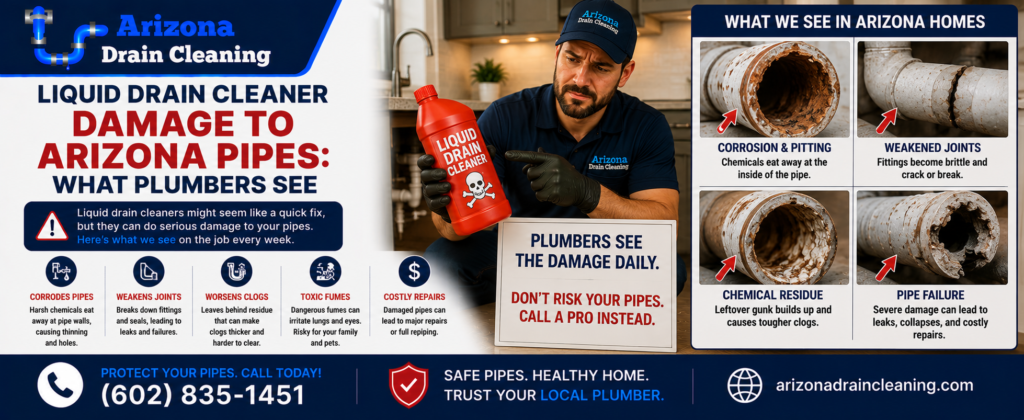
• Do not pour chemical drain cleaners into any drain. They cannot clear a main line blockage and will sit in backed-up water, creating a hazard for the technician
•Do not attempt to open the clean-out access cap yourself unless you know the line is only partially blocked; a fully backed-up main line will release sewage when the cap is removed
• Do not wait, and see; a main line blockage that produces sewage backup is a Category 3 water damage event if it overflows inside your home
Main line blockages: always call a professional
Main line blockages require equipment that is not available to homeowners: truck-mounted hydro jetters, main-line mechanical snakes (typically 100+ feet), and camera inspection systems. More importantly, they require the diagnostic judgment to determine the cause before choosing the method. Clearing a blocked main line without first understanding why it blocked roots, collapse, grease, or scale almost guarantees the problem returns.
Why a Camera Inspection Changes Everything
The single most important tool in main line diagnosis is not a snake or a jetter, it’s a camera. A video camera inspection (sometimes called a sewer scope) sends a waterproof camera through the line on a flexible cable, transmitting live footage to a monitor above ground. It tells the technician and you exactly what is happening inside your pipe: the precise location of the blockage, the material causing it, and the structural condition of the pipe wall. Without a camera inspection, main drain cleaning is an educated guess. With one, it’s a targeted fix.
Camera inspections are recommended in the following situations:
• Any main line blockage, before clearing begins
• Recurring clogs in the same line (to find out why it keeps coming back)
• Before buying or selling a home
• If your home has trees near the sewer line path and pipes older than 20 years
• After any sewage backup event, to confirm the line is fully clear and undamaged
Frequently Asked Questions
Can a main line blockage clear itself?
No. A partial main line blockage may seem to improve temporarily as pressure fluctuates, but the underlying cause, roots, grease, or collapsed pipe, does not go away on its own. The blockage will worsen over time. If you are seeing main line symptoms, the problem requires professional attention.
How often should a main sewer line be cleaned professionally?
For most homes with no known root intrusion or structural issues, sewer line cleaning once every 18–24 months as preventive maintenance is sufficient. Homes with mature trees near the sewer line, pipes older than 30 years, or a history of main line backups benefit from annual cleaning and inspection.
How long does main drain cleaning take?
A standard main line cleaning with a mechanical snake takes 60–90 minutes. Hydro jetting a main line typically runs 90 minutes to 3 hours depending on line length and blockage severity. If a camera inspection is included, add 30–45 minutes. Pipe repair or relining, if needed, is scheduled as a separate service.
What is the clean-out access point and where is it?
The clean-out is a capped pipe fitting that provides direct access to the main sewer line without needing to go through a fixture. In most homes it is located in the yard near the foundation, in a basement or crawlspace, or along the exterior wall closest to the street. Plumbers use the clean-out to insert snaking or jetting equipment directly into the main line.
Is sewage backup covered by homeowners insurance?
Standard homeowners insurance policies typically do not cover sewage backup unless you have a specific sewer backup endorsement or rider. Even with that endorsement, coverage is often limited and may not apply if the backup resulted from long-term neglect. Check your policy before assuming you are covered, and address main line problems promptly to avoid a denied claim.
Seeing Main Line Symptoms? Here’s What to Do Right Now
If multiple drains are slow, you’re hearing gurgling, or you’ve seen sewage backing up into a fixture, stop using water and call a professional. Do not wait until it overflows.
Our team provides same-day main drain cleaning and sewer line cleaning across the Phoenix metro area, with camera inspection included on every main line call so you know exactly what you’re dealing with before we start. Call Arizona Drain Cleaning at (602) 835-1451 right now to schedule a drain cleaning before the next stage of that escalation arrives.