
A drain camera inspection is one of the most useful diagnostic tools available for homeowners, buyers, and property managers, and one of the most underused. If you have experienced recurring drain backups, are purchasing an older home, or simply want to understand the condition of your sewer system before a problem develops, a camera inspection gives you accurate, visual information that no other method can provide.
This article covers what a drain camera inspection is, what it reveals, how much it typically costs, and the specific situations where scheduling one is clearly the right decision.
How a Drain Camera Inspection Works
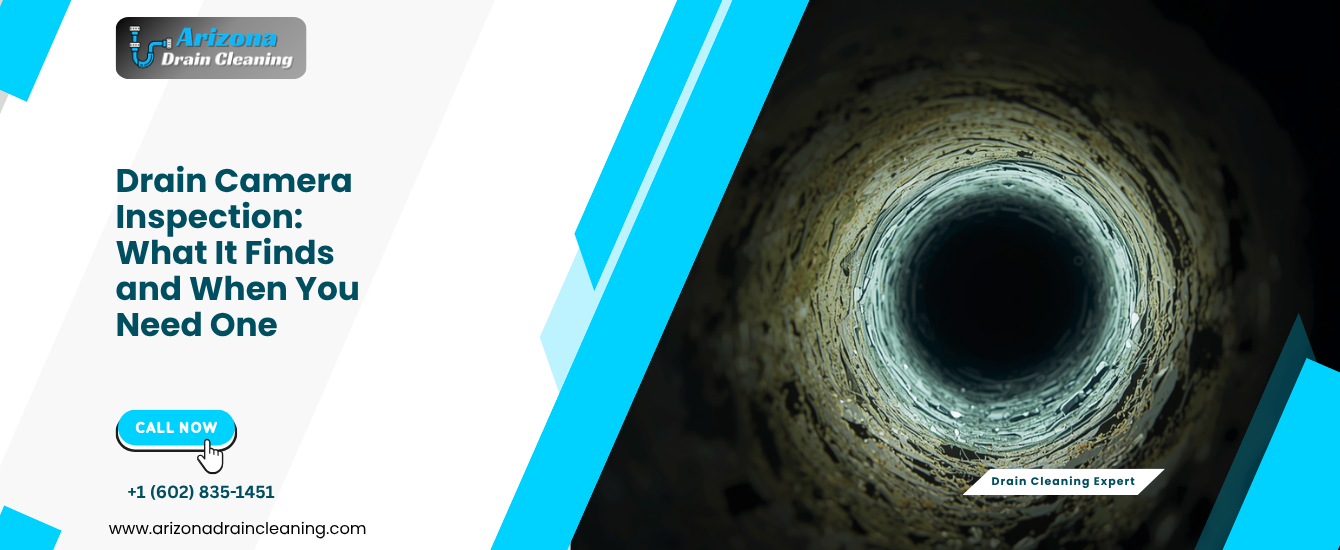
A drain camera inspection, also called a sewer scope or video pipe inspection, uses a waterproof camera mounted on a flexible rod to travel through your drain lines in real time. The camera transmits live footage to a monitor, and the technician records the session for review. A locator transmitter on the camera head allows the operator to pinpoint exactly where inside the pipe any problem is located, giving precise depth and distance measurements that make targeted repairs possible.
Most residential inspections run from a cleanout access point near the house, through the main drain lateral, all the way to the connection point with the municipal sewer. The entire line, typically 50 to 100 feet on a standard residential lot, can be inspected in 30 to 60 minutes.
What a Camera Inspection Finds
Root Intrusion
Tree and shrub roots are one of the leading causes of sewer line failure in established neighborhoods. Roots seek moisture and follow the smallest openings: a hairline crack in a pipe joint, a slightly misaligned coupling, or a deteriorated rubber gasket. Once inside, they expand with the pipe, creating a mass that traps debris and progressively blocks flow.
Camera inspection identifies root intrusion at the exact location and assesses its severity. Minor root infiltration may be cleared with cutting tools and managed with periodic sewer line cleaning. Advanced root intrusion that has deformed or cracked the pipe structure typically requires lining or section replacement.
Pipe Cracks, Fractures, and Collapses
Older clay and cast-iron sewer pipes are subject to physical deterioration over decades of service. Soil movement, freeze-thaw cycles (less common in Arizona but not absent), and point loads from vehicle traffic or heavy landscaping can fracture pipe sections. A fully collapsed section where the pipe has caved in on itself will produce persistent backups that no amount of drain pipe cleaning can resolve because there is no passage for water to move through.
Camera inspection is the only way to identify these conditions without excavation. Knowing whether a pipe is cracked, partially displaced, or fully collapsed determines whether the repair is a spot fix, a lining installation, or a full lateral replacement.
Mineral Scale and Buildup
In Arizona’s hard water environment, mineral scale is a near-universal finding in homes older than 15 to 20 years that have not had descaling service. The camera reveals how thick the scale layer is, how far it extends, and whether it has reduced the pipe’s internal diameter to the point where flow is significantly impaired.
This finding directly informs the treatment decision: moderate scale is addressable with a professional pipe descaling service, while scale combined with pipe corrosion may indicate that lining is the more durable long-term solution.
Grease Accumulation and Debris Pockets
Even in residential drain lines, grease from kitchen waste accumulates over time, particularly at low points and elbows in the drain run. Camera inspection locates these accumulation zones precisely, which allows a sewer line cleaning technician to concentrate hydro-jetting pressure at the right locations rather than running the entire line at standard pressure.
Pipe Belly or Negative Grade
Sewer lines must maintain a consistent downward slope toward the main, typically 1/4 inch of fall per foot of run. When soil settles unevenly beneath a pipe, a section can sag below the intended grade, creating a low point where solids settle and standing water collects. This is called a pipe belly, and it cannot be felt by a snake or cleared by flushing; it is a physical geometry problem that only camera inspection can diagnose. A belly that is causing recurring problems requires either pipe replacement or, in some cases, controlled soil stabilization beneath the affected section.
Joint Offsets and Misalignment
Pipe joints that have shifted out of alignment due to soil movement, improper original installation, or root pressure create ledges inside the pipe that catch debris and toilet paper. Camera inspection identifies offset joints and quantifies how severe the misalignment is, which determines whether it can be managed with regular maintenance or requires correction.
When to Schedule a Drain Camera Inspection
Before Purchasing a Home
A sewer scope inspection before closing on a home purchase is one of the highest-value due diligence steps a buyer can take. Standard home inspections do not include the sewer lateral. Your inspector looks at fixtures and visible drain connections, not what is happening underground between the house and the street.
Sewer lateral repairs and full lateral replacements are among the most expensive single plumbing events a homeowner can face. A camera inspection before purchase gives buyers the information they need to negotiate repair credits, require seller-funded repairs before closing, or make an informed decision to walk away. In older Arizona neighborhoods where original clay pipe sewer laterals are still in service, this is particularly important.
After a Sewer Backup
A single sewer backup can have many causes. If you have called for sewer backup cleaning services and the line has been cleared, a camera inspection afterward confirms whether the cause was a one-time blockage or a structural condition that will produce recurring problems. Without the inspection, a cleared backup can recur within weeks, especially if roots, scale, or a pipe belly are the underlying issue.
| Most Common Camera Findings After a Sewer BackupRoot intrusion at pipe joints is present in the majority of tree-adjacent laterals older than 20 yearsHeavy grease accumulation in the kitchen drain runsScale restriction reduces the effective pipe diameterPipe belly is causing recurring solids accumulationCracked or offset pipe sections that will worsen without intervention |
For Recurring Slow Drains That Resist Treatment
If you have had your drains snaked or jetted and slow flow returns within a few months, a camera inspection is the logical next step. Recurring problems that do not respond to standard sewer drain cleaning services are almost always caused by a structural condition, not a debris issue, and the only way to determine what that condition is and where it is located is with a camera.
As Part of Planned Maintenance on an Older Home
Homeowners in properties that are 30 years old or more in the Phoenix metro area are well-served by a scheduled inspection every 5 to 7 years, even without active symptoms. Many serious sewer conditions develop gradually. A camera inspection at regular intervals catches problems while they are still minor before a hairline crack becomes a collapse or before a small root intrusion becomes an impassable mass.
What a Drain Camera Inspection Typically Costs
In the Phoenix metropolitan area, a standard residential drain camera inspection generally runs between $150 and $350, depending on line length, access point location, and whether the inspection is standalone or bundled with a cleaning service. Some providers include the inspection at reduced cost when it accompanies a hydro-jetting or descaling service.
The inspection cost becomes the context for the repair decision. A finding of root intrusion that requires periodic sewer line cleaning is a manageable ongoing maintenance cost. A finding of pipe belly or partial collapse reframes the conversation entirely and allows the homeowner to plan and budget for a defined repair rather than facing an emergency.
From Inspection to Action
A camera inspection report should include recorded footage and a written summary of findings with footage timestamps corresponding to each issue location. This documentation is useful for insurance claims, contractor quotes, and property disclosure records.
Our team provides full drain camera inspection services throughout the Phoenix metro area, with same-session reporting and clear recommendations for next steps, whether that means scheduling sewer line cleaning, a drain camera inspection, or planning a more involved repair. Contact us to schedule your inspection or to discuss what your last sewer backup may have left behind.
FAQs
1. What is a drain camera inspection?
A drain camera inspection uses a waterproof camera to check inside pipes and sewer lines. It helps identify blockages, cracks, and buildup, providing accurate visuals that guide proper repair and cleaning decisions.
2. When should I get a drain camera inspection?
You should schedule a drain camera inspection if you have recurring clogs, slow drains, or backups. It is also recommended before buying a home to check the condition of underground sewer lines.
3. What problems can a drain camera inspection detect?
A drain camera inspection can detect root intrusion, pipe cracks, blockages, grease buildup, and pipe misalignment. It helps locate problems precisely so technicians can recommend the most effective repair or cleaning solution.
4. How long does a drain camera inspection take?
A drain camera inspection usually takes 30 to 60 minutes for most residential properties. The duration depends on pipe length, accessibility, and the severity of any issues found during the inspection.
5. Is a drain camera inspection worth the cost?
Yes, a drain camera inspection is worth the cost because it prevents guesswork and identifies hidden issues early. It helps avoid expensive repairs by allowing timely maintenance and accurate diagnosis of drainage problems.