
Looking for the full statewide picture? See our Arizona drain cleaning cost guide (2026-2027) with typical prices broken down by service and by city.
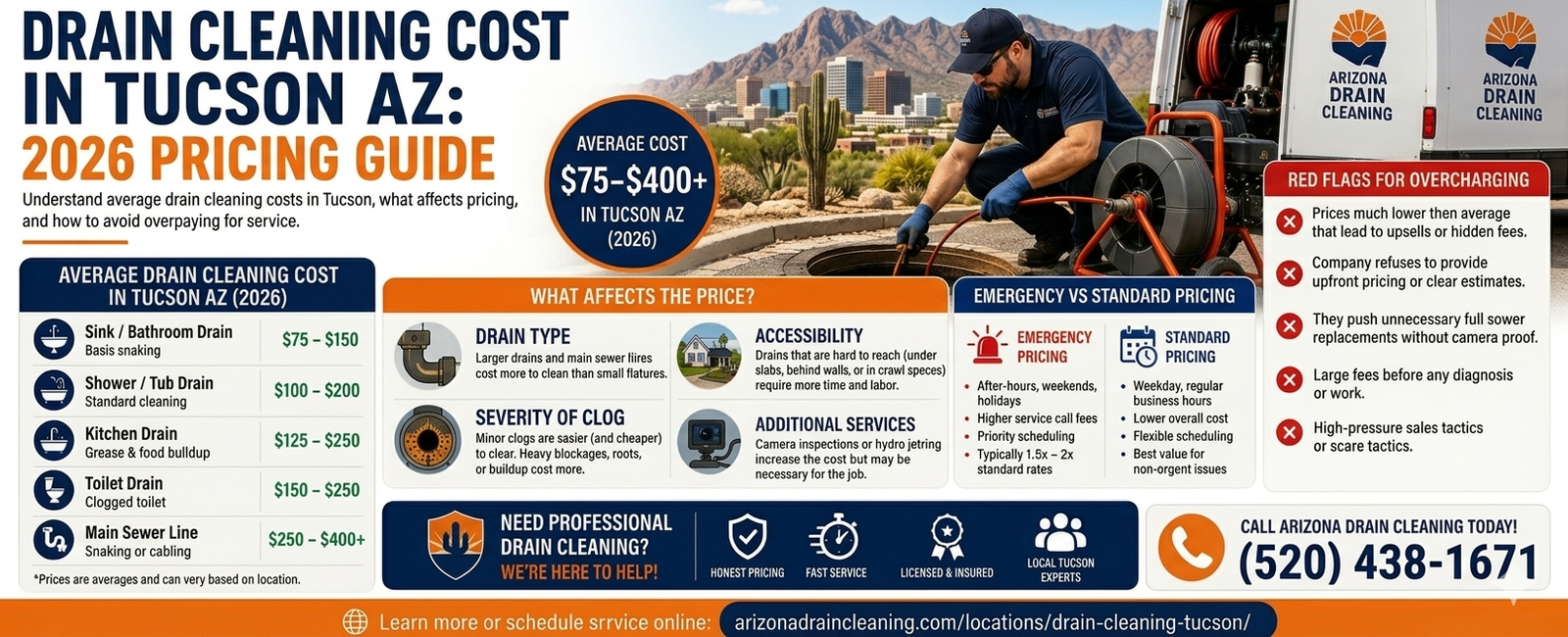
Drain cleaning cost in Tucson, AZ, typically fall between $75 and $400 for most residential jobs in 2026, with the average Tucson homeowner paying somewhere around $185 to $250 for a standard clog. But that number alone does not tell the full story. Tucson is not like most cities when it comes to plumbing. Between the caliche soil beneath your yard, some of the hardest municipal water in the country, and a large inventory of homes built in the 1950s through 1970s with aging pipe systems, drain problems here tend to run deeper and come back more often than in other parts of the country.
This guide breaks down Tucson drain cleaning prices by service type, explains what actually drives your final bill, and helps you figure out when a quick snake job is the right call versus when you need something more thorough. Whether you have a slow kitchen sink in the Foothills or a backed-up main sewer line near midtown, here is what to expect before you pick up the phone.
Tucson drain cleaning in 2026 starts at $75 but can hit $600 fast.
Get an honest upfront quote before any work begins. No surprises, no hidden fees.
What Is the Average Drain Cleaning Cost in Tucson in 2026?
The average drain cleaning cost in Tucson runs between $185 and $247, based on data from completed local projects, though it can range from as low as $90 to as high as $410 depending on severity and scope.
That range makes sense once you understand how different drain jobs are from one another. A hair clog sitting three feet down a bathroom sink drain is a completely different problem than a grease-caked kitchen line or a main sewer lateral with tree roots growing through 40-year-old clay pipe. Both technically fall under “drain cleaning,” but the tools, time, and expertise required are very different.
Here is a breakdown of what Tucson homeowners are actually paying in 2026 for the most common drain cleaning services:
| Service Type | Typical Tucson Price Range |
|---|---|
| Single fixture snake (sink, tub, shower) | $75 to $200 |
| Kitchen drain cleaning | $100 to $250 |
| Toilet clog clearing | $100 to $200 |
| Main sewer line snaking | $200 to $500 |
| Hydro jetting (fixture line) | $250 to $500 |
| Hydro jetting (main line) | $450 to $950 |
| Pipe descaling | $200 to $400 (add-on) |
| Sewer camera inspection | $150 to $400 |
| Emergency or after-hours call-out fee | $100 to $300 (plus service) |
Tucson homeowners are overpaying for drain cleaning every single day.
Call now and find out the fair price for your exact drain problem in 2026.
These figures apply to homes in Tucson proper and surrounding Pima County communities including Marana, Oro Valley, Sahuarita, Vail, and Rita Ranch.
How Much Does Drain Cleaning Cost in Tucson: Breaking It Down by Service
Standard Drain Snaking
Snaking is the most common and most affordable drain cleaning method. A plumber inserts a flexible metal cable, sometimes called an auger, into the drain and rotates it to either break up a clog or pull it out. For a single bathroom or kitchen fixture with a straightforward blockage, you can expect to pay between $100 and $275 in Tucson.
The lower end of that range usually applies when the cleanout is easily accessible and the clog is within a few feet of the fixture. The higher end kicks in when the plumber has to feed the cable deeper, work through multiple bends in the line, or access the pipe from a less convenient entry point.
Snaking works well for hair clogs, soap buildup, and food waste accumulation in kitchen lines. However, chemical drain cleaners and basic snaking cannot touch hard water mineral deposits, grease buildup that has solidified along pipe walls, or tree root intrusions, which are among the most common recurring clog causes in Tucson homes. If the same drain keeps backing up every few months, snaking alone is probably not solving the actual problem.
Main Sewer Line Cleaning
When more than one drain in your home slows down or backs up around the same time, the clog is almost certainly in the main sewer lateral, not in an individual fixture. This is a more involved job. Main pipe clogs in Tucson typically cost $180 for an exterior cleanout service, $270 to clear through a drain vent, and around $400 if a toilet needs to be pulled to gain access and specialized equipment is required.
The key variable here is access. If your home has an exterior cleanout cap in the yard near the foundation, the plumber can feed directly into the mainline without disturbing anything inside the house. Older Tucson homes, particularly those built before 1970 in neighborhoods like Sam Hughes, Armory Park, or the Barrio Historic District, often lack a modern exterior cleanout, which means the plumber has to get creative about access points and that takes more time and costs more.
Hydro Jetting
Hydro jetting uses pressurized water, typically at 1,500 to 4,000 PSI, to scour the interior walls of your pipes clean. It does not just punch through a clog the way a snake does. It removes the buildup coating the inside of the pipe from years of grease, soap scum, and mineral deposits. Hydro jetting services in Tucson typically cost $400 to $800 and are particularly effective at removing the years of mineral buildup that Tucson’s extremely hard water leaves inside residential drain lines.
That higher price tag makes some homeowners hesitate, but consider this: if your drain has been snaked three times in the past two years and keeps clogging, you have already spent $300 to $600 on temporary fixes. A single hydro jetting service that thoroughly cleans the line often prevents recurring problems for a year or longer. In a city like Tucson where hard water mineral scale is constantly working against your pipes, hydro jetting frequently pays for itself within 12 months by eliminating repeat service calls.
One important note for homeowners with older properties: cast iron and clay pipes can be safely cleaned with reduced pressure settings, preserving pipe integrity while still clearing debris effectively. A good plumber will inspect your pipe material and condition before recommending hydro jetting and will adjust the approach accordingly.
Sewer Camera Inspection
A camera inspection involves feeding a waterproof camera on a flexible cable into your drain line so the plumber can see exactly what is happening inside. This is not always necessary for a simple clog, but it becomes essential when you are dealing with recurring backups, sewer line odors, slow drainage throughout the whole house, or when you are buying or selling an older Tucson property.
Camera diagnostic inspections typically cost $150 to $300 and are valuable because they show exactly what is happening inside the pipe without any guesswork, guiding the most efficient approach for persistent problems.
In Tucson specifically, a camera inspection is one of the smartest investments you can make before authorizing any major drain or sewer work. The caliche layer and expansive clay soil common throughout Pima County create underground conditions that shift pipes, separate joints, and create bellied sections where debris collects. A camera tells you whether you are dealing with a blockage, a root intrusion, a pipe that has shifted out of alignment, or all three at once.
Clogged drain in Tucson? The longer you wait the more it will cost you.
Our Tucson drain specialists are available now with fast and affordable pricing.
Why Tucson Drain Cleaning Prices Are Different From the National Average
Most online pricing guides give you national figures that do not account for what actually makes Tucson’s plumbing environment unique. If you have lived here for a while, you already know the desert throws problems at your house that homeowners in other parts of the country simply do not face. Your drain system is no different.
The Hard Water Factor
Tucson’s water hardness measures around 211 parts per million, well above the threshold for very hard water. Calcium and magnesium deposit inside drain pipes over time, narrowing the pipe’s interior diameter and creating rough surfaces that trap grease and debris.
Think of it like this. In a city with soft water, a drain pipe stays relatively smooth on the inside for decades. In Tucson, those same pipes start collecting a mineral crust on their interior walls almost from the day they are installed. Over time, what was once a four-inch sewer line effectively becomes a three-inch or even two-inch sewer line because of the scale buildup coating the walls. Water and waste move through more slowly, clogs form more often, and you end up calling a plumber more frequently than your relatives in states with softer water.
Southern Arizona’s extremely hard water, which registers 15 to 25 grains per gallon in most areas, causes mineral buildup that damages pipes, water heaters, and fixtures far faster than in other regions of the country. That accelerated deterioration is a real cost factor that shows up in how often Tucson homeowners need professional drain service.
The Caliche and Clay Soil Problem
Beneath almost every yard in the Tucson metro area lies a layer of caliche, a calcium carbonate formation so dense it can feel like concrete when you try to dig through it. Caliche creates a tough barrier that prevents normal water drainage and sits anywhere from just 6 to 18 inches below the surface.
When your buried sewer line runs above or near a caliche layer, the soil on either side of it does not absorb moisture evenly. During monsoon season, when Tucson gets hit with intense downpours in a matter of minutes, the ground around your pipes saturates unevenly and shifts. The extreme temperature variations Tucson experiences cause soil expansion and contraction that stresses underground pipes throughout the year, and monsoon season between July and September can overwhelm older sewer systems and cause backups.
The practical result for homeowners is that buried drain and sewer lines in Tucson are under constant mechanical stress from the ground around them. Joints separate. Pipes develop low spots called bellies where debris collects. Root systems from palo verde, mesquite, and other desert trees sense the moisture inside sewer lines and work their way into any crack or loose joint they can find.
Monsoon Season and What It Does to Your Drains
Every Tucson homeowner knows monsoon season from June through September is its own category of challenge. Flash flooding during monsoon season can overwhelm residential drain systems, particularly in midtown Tucson and areas built without dedicated storm sewers. Sand and debris wash into drain openings during heavy rain, and exterior drains get overwhelmed by the volume of water hitting dry ground that cannot absorb it quickly enough.
If your outdoor drains back up during a monsoon storm, that storm debris ends up pushing into your sewer line. When the storm passes and you think everything is fine, you may actually have a partial blockage from sand and organic material sitting in your main line just waiting to become a full backup the next time you run a large laundry load or fill the bathtub.
This seasonal pattern is one of the main reasons professional drain cleaning services in Tucson see a spike in calls every August and September. Getting your main line inspected before monsoon season is a straightforward way to avoid an emergency service call during a storm, which, as noted in the pricing section above, costs 20 to 40 percent more than a scheduled weekday appointment.
Clogged drain in Tucson? The longer you wait the more it will cost you.
Our Tucson drain specialists are available now with fast and affordable pricing.
Tucson Drain Cleaning Prices and Your Home’s Age
If your Tucson home was built before 1985, your pipe system deserves special attention when it comes to drain cleaning. The materials used in residential plumbing changed significantly over the decades, and older pipe types are directly responsible for a large share of the drain problems Tucson plumbers deal with every day.
Cast Iron Drain Pipes
Many older Tucson homes built in the 1950s through 1970s have cast iron drains that corrode and narrow over time. Cast iron was an excellent pipe material in its day. It is dense, reduces noise from flowing water, and can last a very long time under the right conditions. The problem is that the interior of cast iron pipe slowly rusts and corrodes, and the rough, uneven surface that results catches grease, hair, and mineral scale far more aggressively than smooth modern PVC or ABS pipe.
Cleaning cast iron drains requires care. High-pressure hydro jetting needs to be calibrated to the pipe’s condition, because aggressive pressure on a seriously corroded cast iron line can dislodge pieces of the pipe wall or cause a cracked section to fail. A camera inspection before hydro jetting is particularly important in homes with cast iron drainage.
Clay Sewer Laterals
Clay piping was used from the exit point of homes out to the city sewer or septic system, and because clay pipes came in four-foot sections, there are far more connections and joints along the line compared to modern plastic pipe. Those joints are exactly where tree roots penetrate, and once roots take hold in a clay lateral, simple snaking cannot fully solve the problem.
In established Tucson neighborhoods like Broadmoor, Colonia Solana, and the areas surrounding the University of Arizona, clay sewer laterals are still in service under hundreds of residential properties. If your home is in one of these areas and you keep dealing with recurring sewer backups, there is a reasonable chance root intrusion in a clay lateral is at least part of the cause.
Clearing a root-invaded clay lateral requires mechanical root cutting, hydro jetting, or in more serious cases, sewer line replacement. That last option falls outside drain cleaning pricing and moves into a different cost category, but understanding your pipe material helps you have a more informed conversation with any plumber you bring in.
Galvanized Steel Pipes
Homes built before the 1980s in Tucson may have galvanized steel pipes, and over time the inside of these pipes corrodes and restricts water flow, sometimes also affecting water quality. Corroded galvanized pipe interiors are rough and uneven, creating far more surface area for mineral deposits, grease, and soap scum to adhere to.
If your home has original galvanized steel drain lines, expect drain cleaning to be needed more frequently than in a home with modern plastic plumbing, and expect the work to take longer because of the pipe’s interior condition. Some galvanized lines in poor condition may not be suitable for aggressive cleaning methods, which is another reason a camera inspection is valuable before any major drain work in an older Tucson property.
Polybutylene Pipe
Polybutylene was installed in some Tucson homes built between the late 1970s and the mid-1990s. Polybutylene pipes react poorly to water treatment chemicals, leading to cracks and leaks over time, and plumbing professionals consider them defective material that should be replaced rather than repaired. If drain issues in your home are connected to polybutylene supply lines deteriorating and contaminating your drain system, that is a separate conversation from drain cleaning and one worth having with a licensed plumber.
Tucson Drain Cleaning Prices: What Drives Your Final Bill
Understanding the specific factors that determine what you will actually pay makes it much easier to evaluate quotes and avoid surprises.
Location of the Clog
A clog in a secondary line, meaning the branch line that serves a single fixture like your bathroom sink or shower, is almost always less expensive to clear than a clog in the main sewer line. Secondary line clogs can typically be reached with a shorter cable run through the fixture itself. Main line clogs require longer equipment, often a larger diameter cable or full hydro jetting rig, and may require locating and opening a cleanout access point. The further the plumber has to reach into your system, the more the job generally costs.
Accessibility and Home Layout
Older Tucson homes built on slab foundations sometimes lack a conveniently located exterior cleanout. When there is no accessible cleanout, the plumber’s options for reaching a main line clog are limited: through a roof vent stack, by removing a toilet, or by snaking from inside a floor drain if one exists. All of these alternatives add time and labor to the job. If your home does not have a modern exterior cleanout and you deal with recurring drain issues, having a cleanout installed, which typically costs $200 to $400 as a standalone job, can save you meaningfully on every future service call.
Severity and Type of the Blockage
A fresh hair clog just below the drain screen is a 20-minute job. A root mass that has colonized 15 feet of sewer lateral over five years is an entirely different undertaking. Grease blockages that have partially solidified on pipe walls require either mechanical removal or high-pressure water to break up and flush out. The more entrenched and extensive the blockage, the higher the labor time and the more powerful the equipment needed.
Time of Service
Scheduled weekday appointments are the most affordable option. Emergency calls, defined as same-day or after-hours service, typically run 20 to 40 percent higher. A main line backup that might cost $250 during a Tuesday morning appointment could run $350 or more on a Friday night or during a weekend monsoon storm. If your drain situation is urgent but not a true emergency, waiting until the next business morning almost always saves money.
Service Call or Dispatch Fee
Most Tucson plumbers charge a service call or dispatch fee ranging from $50 to $100. This covers the cost of sending a licensed technician to your property with a truck and equipment. In many cases this fee is applied toward the total job cost, but not always. Ask when you call. A transparent plumber will tell you upfront how the dispatch fee works before anyone shows up at your door.
Tucson drain prices vary widely in 2026 and most people don’t know why.
Talk to a local expert today and get a fair transparent quote for your home.
Signs Your Tucson Home Needs Drain Cleaning Right Now
Some warning signs are obvious. Others are easy to write off until a small problem becomes an expensive one. Here are the signals worth taking seriously, particularly in Tucson where the underlying conditions described in this guide mean problems tend to escalate faster than in cities with softer water and more stable soil.
Multiple slow drains at the same time. A single slow fixture usually points to a secondary line issue. When two or more drains in different parts of the house all start draining slowly at once, your main sewer line is telling you something.
Gurgling sounds from drains or the toilet. That bubbling sound you hear when water goes down the sink or when the toilet flushes is air being pushed back through a partial blockage. It is one of the earliest warning signs of a developing mainline problem.
Sewer odors inside the home. If you can smell something coming up from a floor drain, a bathroom drain, or from under a sink, that smell is not just unpleasant. It means there is either a blockage trapping organic waste inside your drain system or a vent issue, and either one warrants a call to a professional.
Water backing up in unexpected places. If flushing your toilet causes water to rise in the shower, or running the washing machine causes the kitchen sink to bubble, you almost certainly have a mainline problem. Stop using water as much as possible and call a plumber.
Unusually green or wet patches in your yard. A broken sewer line acts as an underground fertilizer source. If one area of your yard is suspiciously greener than the surrounding desert landscape, or if you notice wet patches in an otherwise dry yard, a cracked or separated pipe is a likely cause. In Tucson’s desert climate, finding a consistently wet spot in your yard when it has not rained recently is a particularly telling sign.
Recurring clogs that keep coming back. If you have had the same drain professionally snaked twice or more in one year, snaking alone is not fixing the actual problem. A camera inspection at that point is the most sensible next step because it will show you exactly what is causing the recurring blockage.
DIY vs Professional Drain Cleaning in Tucson: An Honest Look
A bottle of Drano costs between $5 and $10 at any hardware store on Oracle Road or Speedway. It is tempting, especially for what looks like a minor slow drain. But for Tucson homeowners specifically, store-bought chemical drain cleaners create more problems than they solve. Chemical drain cleaners can only clear small, soft clogs like hair and soap residue, but they cannot touch the mineral deposits, hardened grease buildup, or root intrusions that cause most of the recurring clogs in Tucson homes.
Beyond that, harsh chemicals accelerate corrosion in galvanized steel and cast iron pipes. If your home has older metal drain lines, adding acidic or caustic chemicals to water that is already sitting in a partially blocked pipe is a fast way to degrade pipe walls that may already be in questionable condition.
A hand-crank drain snake from a home improvement store handles some basic hair clogs in shower and bathroom sinks reasonably well. The limitation is reach and torque. Consumer-grade snakes cannot get deep enough into a mainline, cannot cut through root intrusions, and cannot clear mineral scale from pipe walls. For anything beyond the most superficial fixture clogs, professional equipment and training produce results that last significantly longer.
What to Ask Before Hiring a Drain Cleaning Company in Tucson
Not all drain cleaning companies operate the same way. Here are the questions worth asking before you book anyone:
Do you provide a written estimate before starting work?
A reputable company will tell you the price before touching a pipe. If a technician wants to get started before giving you a firm number, that is a warning sign.
Is there a dispatch or service call fee, and is it applied to the job?
Some companies fold the service call fee into the total. Others charge it separately on top of the job cost. Know this before you schedule.
Are your plumbers licensed under the Arizona Registrar of Contractors?
All plumbing work in Arizona requires an ROC license. A licensed contractor (look for the ROC number) carries insurance, meets state competency standards, and gives you recourse if something goes wrong.
Do you offer a warranty on drain cleaning work?
Quality drain cleaning companies typically guarantee their work for at least 30 to 90 days. If a drain backs up again within that window, they should come back at no charge.
What method do you recommend and why?
If a technician immediately recommends hydro jetting without looking at your system, or recommends a full sewer replacement for what sounds like a minor clog, ask for an explanation. A good plumber is willing to walk you through the reasoning.
How to Keep Your Tucson Drains Cleaner for Longer
Regular maintenance is always cheaper than emergency repairs. A few habits go a long way in a city where hard water and desert conditions are constantly working against your plumbing system.
Running hot water down your kitchen drain for 30 to 60 seconds after washing dishes helps keep grease from solidifying in the line. Drain screens in every shower and bathtub catch hair before it makes it into the pipe. Never put coffee grounds, cooking fats, or starchy foods down the kitchen sink. And while this may seem obvious, avoid flushing anything other than toilet paper down the toilet. Wipes marketed as “flushable” do not break down the same way tissue does and are one of the most common contributors to sewer line clogs in residential neighborhoods across Pima County.
Annual professional drain cleaning is recommended for most Tucson homes specifically because of hard water mineral buildup. Properties with mature palo verde, mesquite, or other desert trees near sewer lines benefit from professional cleaning every six months to stay ahead of root intrusion. A once-a-year preventive cleaning typically costs $100 to $200 and is almost always less expensive than dealing with a backup that brings a plumber out on an emergency basis.
Ready to Get a Real Quote? Call Arizona Drain Cleaning today.
If you are dealing with a slow drain, a backed-up sewer line, or a recurring clog that keeps coming back no matter what you try, do not wait for it to become an emergency.
Call Arizona Drain Cleaning at (520) 438-1671for upfront pricing, honest diagnostics, and service that is built around what Tucson homes actually need. Same-day and emergency appointments are available across the Valley.