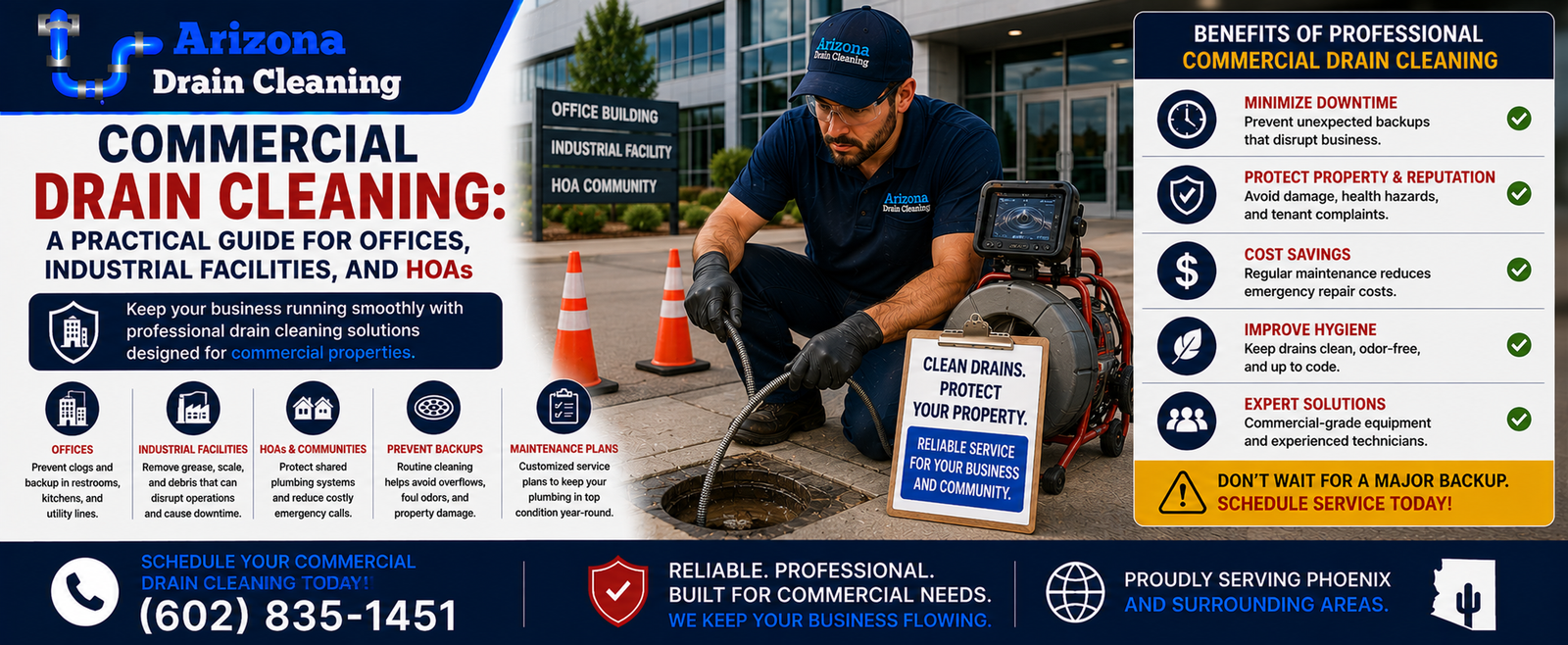
Drain problems in a commercial or multi-unit property are not simply larger versions of a residential clog. Commercial drain cleaning involves more users, more complex plumbing systems, stricter regulatory requirements, and consequences that extend beyond a single household, including tenant complaints, code violations, and liability exposure. Managing commercial drain cleaning needs effectively requires a different approach than calling for service only when something goes wrong.
Commercial drain cleaning is less about reacting to emergencies and more about preventing them. When a system fails in a commercial environment, the impact is immediate: tenants complain, operations slow down, customers are affected, and in some cases regulatory or safety issues can arise.
This guide breaks down the core drain cleaning needs of three major commercial property types and explains why proactive maintenance is usually more cost-effective than emergency repairs.
Key differences in commercial drain systems
| Factor | Residential Systems | Commercial Systems |
|---|---|---|
| Usage volume | Limited household use | High and continuous usage |
| Plumbing layout | Simple, isolated lines | Complex, interconnected systems |
| Blockage frequency | Occasional | More frequent due to load |
| Consequences of failure | Inconvenience | Business disruption and liability |
| Maintenance approach | Reactive | Preventative and scheduled |
Office Buildings and Light Commercial Properties
In office and light commercial environments, the most common drain issues are restroom drain backups, breakroom and kitchenette line blockages, and parking lot drain clogs. None of these is complicated in isolation, but in a multi-tenant building, a single blocked main can affect multiple floors and multiple tenants simultaneously, which means every hour of delay has a direct impact on occupancy and tenant relations.
Facilities managers in office properties benefit from scheduled commercial drain cleaning services on a documented cycle. This typically means annual hydro-jetting of main drain lines, semi-annual floor drain maintenance in restrooms and mechanical rooms, and quarterly inspection of parking lot catch basins and surface drains.
Having a service agreement in place with a commercial drain provider also means priority scheduling when an unplanned event does occur. Emergency response times for contracted clients are almost universally faster than for one-time callers, which matters when a restroom backup is affecting a tenant’s business operations.
Common problems
| Issue | Cause | Result |
| Toilet backups | Excess paper and misuse | Restroom shutdowns |
| Sink clogs | Soap buildup and debris | Employee inconvenience |
| Sewer line slowdowns | Partial main line blockage | Multiple restroom issues |
Industrial and Manufacturing Facilities
Industrial drain systems operate under conditions that no residential or light commercial system faces: process water discharge, chemical wash-down, heavy sediment loads from machining or fabrication operations, and high-volume floor drain networks that may span tens of thousands of square feet.
Industrial drain cleaning services at this level require equipment and expertise beyond standard residential hydro-jetting. High-capacity vacuum trucks for sediment and sludge extraction, large-diameter jetting for 6- to 12-inch mains, and compliance documentation for discharge regulations are all part of the service profile.
Common problems
| Issue | Cause | Result |
| Pipe buildup | Industrial waste and solids | Reduced flow capacity |
| Grease or oil accumulation | Machinery discharge | Severe blockages |
| Sediment clogging | Process byproducts | Equipment downtime |
Key considerations for industrial facilities include:
•FOG and chemical compatibility: Industrial kitchens, food processing facilities, and chemical manufacturing each have specific discharge requirements. Your drain service provider should understand local pretreatment regulations and document service for compliance records.
•Sediment trap and interceptor maintenance: Many industrial facilities operate sand/oil interceptors or sediment traps that require periodic pump-out and inspection, separate from mainline drain cleaning.
• Floor drain frequency: High-traffic manufacturing floors with frequent wash-down cycles may require quarterly or even monthly drain maintenance to prevent sediment accumulation in drain bodies and lateral lines.
•After-hours scheduling: Industrial operations often cannot shut down during business hours for drain maintenance. A provider who offers flexible scheduling, including weekend and overnight service windows, is a practical necessity rather than a premium.
For facilities with regulated discharge, maintaining a service record with dates, scope of work, and technician certification is not optional; it is a compliance requirement that may be audited by the local municipality or state environmental agency.
HOA Common Areas and Multi-Unit Residential Communities
Homeowners’ associations and property management companies responsible for common area infrastructure face a specific challenge: drain systems that serve many residents but are maintained by no individual resident. Pool deck drains, community restroom facilities, clubhouse kitchens, parking lot storm drains, and shared sewer laterals all require coordinated maintenance that falls to the association.
Neglected common-area drains create compounding problems. A blocked parking lot storm drain that overflows during an Arizona monsoon is a slip-and-fall liability. A shared sewer lateral that backs up into multiple units generates simultaneous resident complaints, emergency service costs, and potential damage claims. A community pool deck with blocked drains creates standing water that is both a safety hazard and a health code concern.
Common problems
| Issue | Cause | Result |
| Main line blockages | Shared usage across units | Multiple homes affected |
| Storm drain clogs | Debris and landscaping runoff | Flooding in common areas |
| Sewer backups | Grease and foreign objects | Property damage and complaints |
HOA boards and property managers benefit from working with a single commercial drain provider who can coordinate service across all property drain systems under one maintenance agreement. This consolidates scheduling, documentation, and billing and ensures that no drain system falls through the gaps between different contractors.
The Case for a Commercial Drain Maintenance Contract
Emergency drain service for a commercial property is significantly more expensive than planned maintenance in direct cost, in operational disruption, and in damage that accumulates between emergency events. A maintenance contract replaces unpredictable reactive costs with a fixed, scheduled service that can be budgeted and planned.
Well-structured commercial maintenance agreements typically include:
•A documented service schedule tailored to the property’s specific drain systems and usage patterns
•Priority emergency response for contracted clients is typically same-day or next-business-day
•Service records for each visit, including findings and recommendations
•Prorated or discounted rates for unscheduled service calls that fall outside the maintenance scope
•Annual review of the service schedule to adjust for changes in facility use or system condition
For property managers responsible for multiple sites, a single-provider agreement across locations simplifies vendor management, ensures consistent documentation standards, and often produces better pricing than site-by-site contracting.
Choosing a Commercial Drain Service Provider
Not all drain cleaning companies are equipped for commercial and industrial work. When evaluating providers, look for demonstrated experience with your property type, appropriate licensing and insurance for commercial work in Arizona, the ability to provide compliance documentation if required, equipment capable of handling your pipe sizes and drain types, and references from comparable commercial accounts.
Our team provides commercial drain cleaning and industrial drain cleaning services throughout the Phoenix metropolitan area, with maintenance contracts available for office buildings, manufacturing facilities, HOAs, and multi-site property management portfolios. Contact us to discuss a service plan for your property, or visit our Commercial Drain Services page to learn more about what we offer.
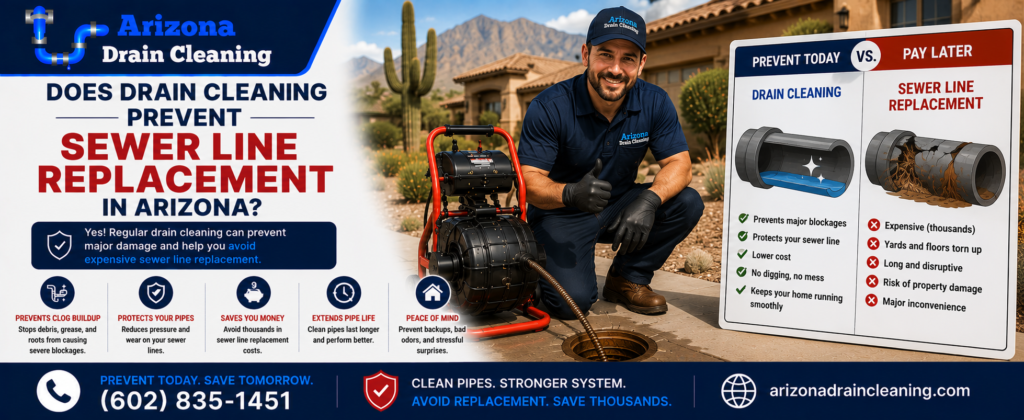
Reactive vs proactive maintenance
| Approach | Description | Outcome |
| Reactive service | Call only when a problem occurs | Higher emergency costs and downtime |
| Preventative maintenance | Scheduled inspections and cleaning | Fewer failures and lower long-term costs |
Preventative maintenance contracts are especially effective for commercial properties because they reduce the likelihood of emergency calls, extend system lifespan, and allow issues to be addressed during planned downtime instead of peak operational hours.
Why commercial drain cleaning requires a different strategy
Commercial systems require more than basic snaking or one-time fixes. Effective maintenance often includes:
- Scheduled hydro jetting for high-use lines
- Sewer camera inspections for early detection
- Storm drain cleaning before seasonal rainfall
- Grease management for food service facilities
- Main line preventative clearing on a fixed schedule
Call Arizona Drain Cleaning at (602) 835-1451 right now to schedule a drain cleaning before the next stage of that escalation arrives. Same-day availability for urgent situations, upfront pricing before any work begins, and ROC-licensed technicians who understand what Arizona’s specific conditions do to drain systems that are not maintained.
FAQs
1. What is commercial drain cleaning?
Commercial drain cleaning removes blockages, grease, sediment, and debris from plumbing systems in offices, restaurants, HOAs, and industrial properties. Regular maintenance helps prevent backups, property damage, and costly emergency plumbing repairs.
2. How often should commercial drain cleaning be scheduled?
Commercial drain cleaning should be scheduled every few months, depending on property usage, drain size, and debris levels. High-traffic facilities and restaurants usually require more frequent maintenance to prevent recurring drainage issues.
3. Why is commercial drain cleaning important for HOAs?
Commercial drain cleaning helps HOAs maintain shared plumbing systems, storm drains, and pool deck drains. Regular service prevents flooding, backups, unpleasant odors, and liability issues that can affect multiple residents simultaneously.
4. What methods are used for commercial drain cleaning?
Commercial drain cleaning commonly uses hydro jetting, drain snaking, vacuum trucks, and camera inspections. The right method depends on pipe size, blockage severity, and the type of debris inside the drainage system.
5. Can commercial drain cleaning prevent emergency backups?
Yes, scheduled commercial drain cleaning removes buildup before it causes severe blockages. Preventive maintenance reduces emergency service calls, protects property infrastructure, and keeps business operations running without costly plumbing interruptions.